


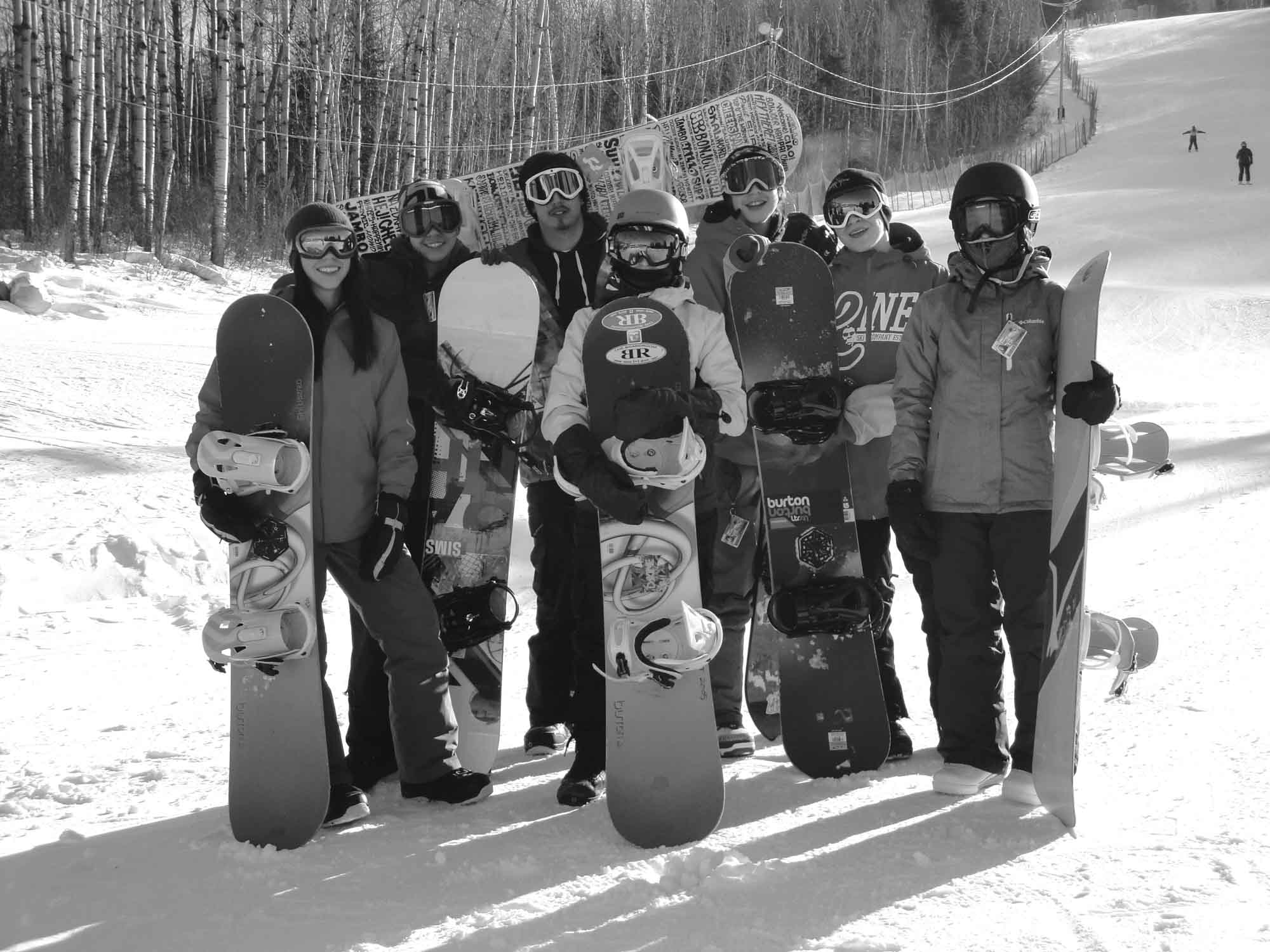
Fort William First Nation is one of the first communities in Ontario to partner with a national First Nations snowboarding organization to teach local youth the sport while encouraging positive lifestyles.
Seven youth between the ages 13 and 15 and one coach are a part of the new snowboard team that had their first practice on Jan. 25.
Emerson Charlie joined the team because he wanted to learn something new.
“The first day was fun,” the 14-year-old said. “I wiped out a lot.”
Evan Maclaurin, also 14, said he wanted to meet new friends and also has higher hopes with the sport.
“I think this is a good opportunity to get noticed by sponsors,” he said. “My hope is to get to the Olympics and to be good.”
The Fort William Snowboard Team is part of an expansion of the First Nations Snowboard Team (FNST), which also expanded to Sault Ste. Marie and Collingwood, Ont.
The FNST was established about 10 years ago by two First Nations snowboarders in British Columbia work towards the Vancouver Olympics. It has since been growing towards being a sustainable national organization and encourages Aboriginal youth to live an active, healthy life through snowboarding.
“The First Nations Snowboard Team is using snowboarding for social change,” said Court Larabee, a FNST division manager and a coach. “We are improving the lives of youth through hard work, active lives and commitment.”
Larabee said it’s a one of kind program managed by and created by and for First Nations and sponsored by First Nations, governments, resorts and private sponsors.
“We were the first ones to have First Nations, community, corporate, federal and provincial sponsorship,” said Larabee, a member of Lac des Milles Lacs First Nation who now lives in Squamish First Nation. “We bridged the gap between all of these markets.”
The program has 24 divisions, 50 Canada Snowboard coaches, 27 competition officials and 450 youth participants in Alberta, B.C., Ontario, Saskatchewan and Washington, D.C.
The program was started to provide youth positive opportunities and more winter sporting options, to get kids active and healthy, out of and involved in their community and to build character, Larabee said.
“Our main punch line is, FNST promotes a healthy living with a holistic approach to reduce Type 2 Diabetes, obesity and inactive lifestyles while providing a life sport,” said Larabee.
Different divisions of the program include recreation and high performance teams and
coaching. Members of the team are taught about culture, healthy eating and lifestyles, leadership, sports injury and the natural environment to create social change.
“This program can teach many things like its okay to be scared of something you have never tried before,” Larabee said. “By learning and taking the right steps and following strong mentors members prove they can do anything.”
First Nations Snowboard Team was designed around the Olympic podium model and legacy of the Vancouver Olympics. Recreation members can move into high performance teams to compete at the national level.
An FNST member did not make it to the last or current Winter Olympics but the goal of the program is to one day have a member be up on the podium, said Larabee.
“Our hope for the next Olympics is to have that athlete right around the corner.”
Youth who began with the program 10 years ago went from being a snowboard recreation member to an athlete, competitor and coach. It is a lifelong program for recreating, working and mentoring within it.
“Everyone who has been on our team since its inception is still a part of our strong family, our ever growing family,” said Larabee.
FNST is partnered with the national organization of Canada Snowboard, where coaches and members follow the equipment, procedures, riding and teaching guidelines.
“Safety is number for the First Nations Snowboard Team. We really focus on safety first and learning the basics first,” said Larabee.
Larabee said Aboriginal snowboarding is a growing market. Communities living near a ski hill can partner with First Nations Snowboard Team to start a long term athlete development program at a high subsidized rate.
“FNST riders must be drug and alcohol free, maintain a C-average (school grade) and be in good community standing,” Larabee said. “FNST are ambassadors on and off the mountain. So far we have seen unprecedented responses within divisions of our teams.”
Fort William First Nation partnered with Loch Lomond Ski Hill and First Nations Snowboard Team to start a snowboard team.
A rider for 10 years at Loch Lomond Ski Hill, Fort William coach Sean Morriseau the organization and sport help Aboriginal youth get together and into a new sport and away from bad habits.
“I joined the team to teach youth. Snowboarding is good for Aboriginal youth to be able to progress in life.”
Morriseau said it is normal for first-time snowboarders to fall on the first day of practicing, as was the case on Jan. 25, but he and team members said they were riding in no time and having fun.
Michael Johnstone, 13, said it’s fun to learn something new.
“I see lots of opportunities like going to the Olympics and travelling to accomplish more,” he said.


When I was a boy growing up in my home community of Attawapiskat on the James Bay coast, I was deathly afraid of looking at the full moon.
I grew up...
I’m happy to see the ongoing support and assistance in our northern remote communities to help our people cope with so many lifelong and generational issues...