


The health care system is geared by political decisions to serve the rich.
Public health policy is the making of laws designed to address needs of the entire population. For example, the law reducing smoking in public places improves health for all races, all ages regardless of income. Public exposure to second-hand smoke has ended.
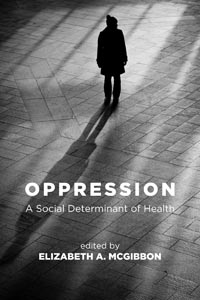
Elizabeth McGibbon, editor of Oppression: A Social Determinant of Health, and her 11 colleagues have written a condemning book addressing the many holes in Canada’s health care system, a system primarily focused on health for the rich.
Denise Spitzer says oppression creates disease; it is written on their bodies, minds and spirits.
‘Such everyday mental stress (of racism and bigotry’s chronic and traumatic effects), for example, eventually stresses the body’s adrenal system to the point where physical symptoms, such as Type 2 diabetes and high blood pressure, occur as a response to adrenal fatigue,’ she says.
Addressing illnesses related to chronic oppression (e.g. assimilation) McGibbon says, pills cannot reorganize the stress of living in an oppressive society.
And in a refreshing view Spitzer says ‘smoking or alcohol consumption are regarded as coping strategies, self-medication in response to the toxicity of one’s social world.’
Charmaine McPherson says human rights violations are the basis for poor health outcomes for vulnerable people around the world but also acknowledges it takes money to address the human rights issues.
Confronting the lack of public health scrutiny over negative effects of corporate profit on health and the environment McGibbon and Lars Hallstrom use the tar sands as a perfect example. It is Fort Chipewyan First Nation, downstream from the tar sands, where significant increases in cancer of the blood and lymphatic system, biliary tract and soft tissue (including lungs) occur.
In a time where the tar sands industry claims to be able to restore the land to its pre-mined state, the Alberta government’s record show the reclamation of a paltry 0.2 percent of the total land mass disturbed by the mines. The destruction of 23,000 hectares of AB’s wetlands removes ecological, cultural and filtering benefits from the entire world.
Globalization of health has resulted in research directed toward profitable diseases but not diseases that affect the poor. Many scholars have linked oppression with over-medication or mis-medication of marginalized peoples for the profits of huge drug companies.
This book is a must-read. It depicts the risks we face depending on the government for health. Reclaiming traditional ways of living is a necessity.
Oppression: A Social Determinant of Health -- Elizabeth A. McGibbon (Ed) (Fernwood Publishing, Black Point, NS; 2012; ISBN 978-1-55266-454-4 (bound), ISBN 978-1-55266-445-2 (paperback); 239 pages, $29.95)



Maachestan, the Cree word for the annual spring river ice breakup, is happening all along the James Bay coast. This is a very important time of year for...
I was proud to see First Nation youth representing our northern homelands on the international stage this past month at the United Nations. Jeronimo...