



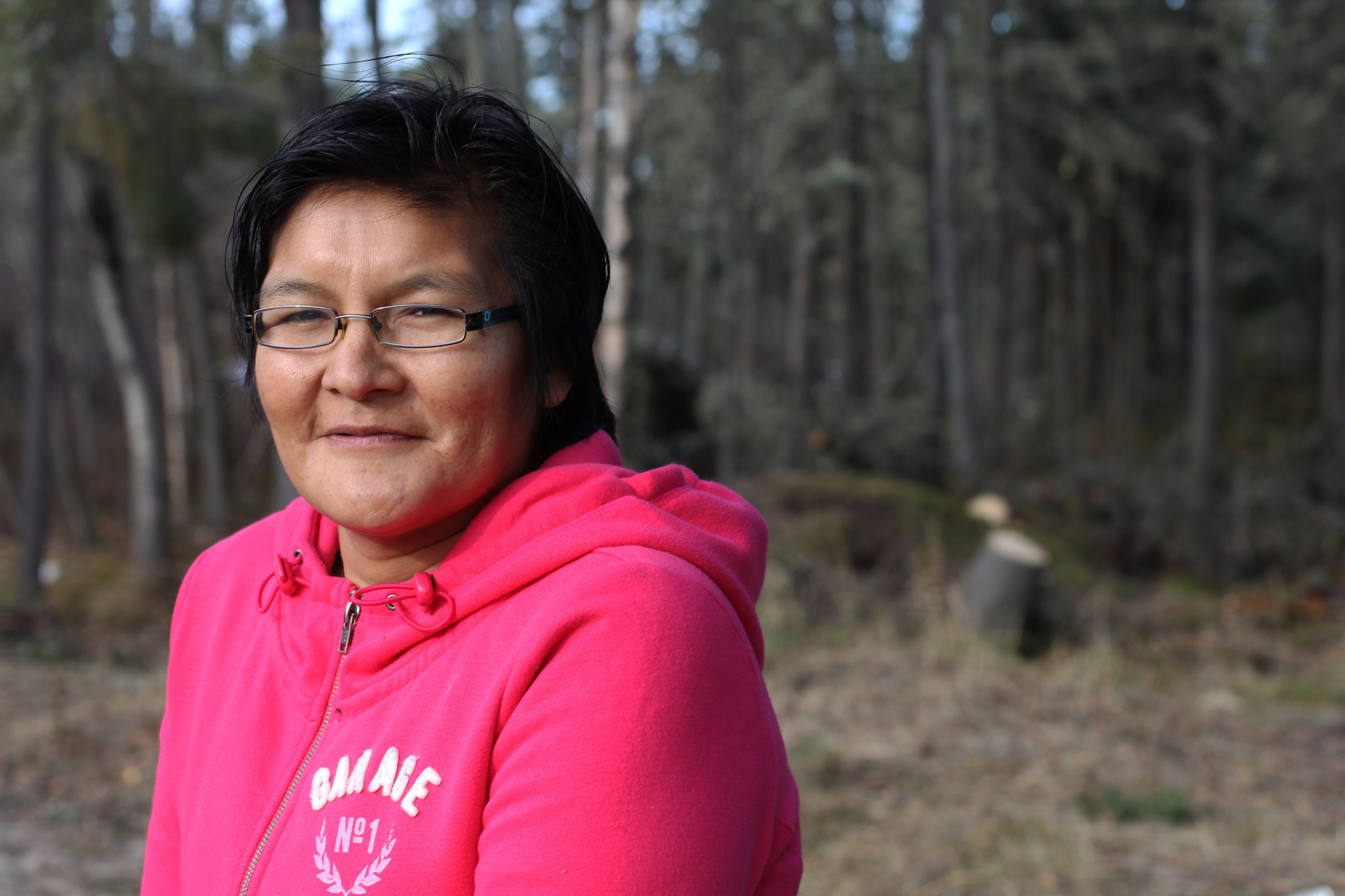
North Caribou Lake First Nation has taken a mountainous step to fight against the prescription drug abuse that has rapidly overtaken the community of 1,000. SEVEN Youth Media writer James Benson takes readers inside the treatment centre where he interviews four participants who share their stories of struggle and success and their dreams for a better tomorrow.
James Benson
Special to Wawatay News
It’s 2 p.m. on a beautiful Wednesday afternoon. I am driving over to the New Horizons Suboxone Treatment Centre, which has just opened two days ago. The new centre is the second building to house a Suboxone program and the facility itself is more spacious and comfy. I arrive and the third intake clients, who have just started their inductions, stand at the door greeting me and welcoming me with a smile, offering hugs and a hot cup of tea. The smiles on their faces are priceless and warming. I meet Crystal Keeash, a client in the first Suboxone intake program who now works full time as an assistant coordinator at the treatment centre. We arrange and set up interviews with the participants, and Keeash excitedly agrees to be one of our interviewees.
Before we begin, let me share with you briefly about some of the recent events that have happened in the community and left behind a lot of hurt, grief and turmoil. North Caribou Lake has gone through a rough patch in the last year. Recently six young people have taken their own lives within a five-week period. The majority of people now in the Suboxone program were closely related to them. These tragic losses have resulted in children having one or both parents gone in a matter of days.
Because of these fatalities, the community, including its frontline workers, pastors, Elders and all band members in general has been greatly overwhelmed with much pressure to try and do something so that nothing like this happens again. Programs have been started for all age groups. For toddlers and pre-kindergarten children, the staff at the ECD building open up almost everyday for them to drop by and hang out with other toddlers and young mothers. At the youth drop-in centre, the staff are working overtime to keep the youth busy by promoting physical activity such as soccer tournaments, hockey, pow-wow drumming sessions and more. At the school gym, young adults are kept busy playing various activities such as volleyball and floor hockey, while at the local church, a bible study and singing night is happening for those who may be interested and an arts and crafts class is happening at another. All of these activities have kept everybody on their feet with places to go and things to do, and the impact of teamwork has played a positive role within the community.
As I walk through the corridors of the New Horizons building, the sense of pain still lingers in the air. But through it the participants show much interest and are keen to learn and gain new knowledge on their quest to end their addiction to drugs. The following are those who are struggling to end their addiction to prescription drugs. These are their stories.
Wayne Kakekayash
His future is bright. Comparing how life was just months ago, Wayne Kakekayash, says “I’m clean and happy.”
Like many of the clients who are enrolled in the Suboxone treatment centre, Wayne says he started using prescription drugs as an experiment 13 years ago and was instantly hooked. All odds were against him. Being unemployed and full of trouble, he had no hope for the future.
“I pretty much got sick and tired of it. I hated waking up sick and trying to find money,” he said, recalling that he just about sold everything in his possession to get his “fix,” even nearly selling his truck.
“I almost sold my truck but then it clicked in me that I really needed my truck,” he said, as he looked back at his life in the last six months.
Remembering the feeling of being sick, Wayne says he was full of anger and rage.
“I was in constant pain when I didn’t have nothing. I was angry. Once I took my hit (a term used for getting a fix) I was back to my normal self.”
In order to get his fix, Wayne says he did various odd jobs. It wasn’t until recently, when his grandmother talked to him about seeking healing for himself, that he decided to change his ways.
“I had a talk with my grand mother. She told me she wanted me to get better before she passes and that’s what I’m doing, requesting what she asked me to do,” he said.
Within a few days, he was accepted into the Suboxone Treatment Program. His first impression, once he accepted his path, was fear.
“I was scared,” Wayne recalled, stating that he was afraid of what the outcome would be if he didn’t succeed in the program. “I was scared that I would get sick before getting into the program. But because my childhood friends were here, I decided to stay. It was a good decision I made. I don’t regret it.”
His decision has not only caused a positive step for himself, but for his mother also.
“My mother and I came into the program on the same day, now we both don’t do drugs and I’m happy about it,” he said.
Wayne acknowledges his friend who has been very supportive towards seeking inner healing and finding peace for him self.
“My friend would always push me to get off it. When I told her I was in this program, she was happy. She just kept encouraging me with positive encouragement.”
With all that he has gone through, he says that this is only a stepping-stone of what is yet to come.
“I still got stuff to deal with from my past. I still have a long way to go.”
Darlene Kenequanash
Darlene Kenequanash is a mother of three children, and a grandmother of four. Her husband, Zebulon, is also one of the participants in the Suboxone program.
Darlene is known to be a cheerful woman, confidant, outgoing and open-minded. She gives moral support when needed and her role now as a volunteer at the treatment centre has been more then helpful.
As a very athletic person in her younger days, she recalls the time she started getting hooked on pain medication to ease her aching bones. After each baseball game, she remembers having severe hip problems that would cause her to rely on Tylenol 3s, then eventually Percocets before she gradually started using Morphine. The doctors later found out that she had a congenital hip dysplasia, a condition where the hip joint has not developed perfectly. As the doctors limited the use of her prescribed medication to morphine, she realized that she was dependent on these pills.
“I started to look elsewhere after they lowered my prescription,” she said, explaining that she was not aware that they sold these pills off the streets.
Darlene previously worked full time as a Probation Parole Services Worker. Once she started buying pills off the street, she knew she could not work there anymore.
“I just gave it up. I didn’t tell my boss that I was giving it up. I just backed off. I was supposed to continue seeing clients but I didn’t feel right doing this position knowing that I was buying pills.”
Her feelings of withdrawal were difficult to deal with.
“I was agitated. I had sweats and was vomiting lots,” she said. “My kids would help me look for medication because they seen what I was going through.”
It was her youngest daughter, Faith, who gave her support and love during those moments she thought she wouldn’t get through.
“Of all my three kids, my baby Faith, she pampered me when I was sick. She would always check up on me, kiss me, and tell me she loved me everyday,” she said.
With the pain she caused for her family due to her dependency on prescribed medication, she knew she was dragging her whole family down.
“It got to the point where my husband started using too. I dragged him down with me.”
It was during this time Darlene realized that her son was also using.
“It got to the point where I started selling stuff, borrowing money. My family didn’t like me doing this,” she said. “There were times I traded my wood for morphine. Once the wood was gone, I started taking things from inside the house. I started cleaning out my house completely.”
Her quest for healing from prescription drug abuse started after she tragically lost her daughter Faith in May 2012. Knowing she needed change, she tried a Suboxone program in Sioux Lookout, it did not work out because she wanted to be back home with her family.
Once the program opened up in Weagamow, she said that her husband and herself would check in on a daily basis and stayed for the sessions.
“When the program started in July, I made my way into the group because I had to pick up our doses. When I went in to pick up my doses, I would stay for the sessions because they were interesting. They started talking about the root of the problem. They would talk about grief and loss. This is why I stayed because I was drawn to the subject,” she said.
Now, with all the positive changes happening in her life and in their home, she says her family has become much closer.
“We get together and do things now as a family,” she said. “In fact, my husband is working on our kitchen and my grandkids and I are learning how to bead.”
Thinking back to how life was like before seeking help, she says she never wants to relive that life again. “My heart is set that I want to be clean. I have plans for the future. I want to get my kids into hockey and get them the stuff they need.”
Valerie Keeash
Helpless, hopeless and in desperate need for a change, Valerie Keeash says she needed a change in direction for her life for the sake of her family.
Valerie, a soft-spoken mother of six, says she attempted to get off drugs at one point but was not successful.
“I tried quitting before,” she said of her time at the Sioux Lookout Withdraw unit in December 2011. “I finished that program but relapsed once I came out. I had told the workers that I was going to stop and help people who are addicted too but that didn’t happen.”
Keeash says she would spend thousands of dollars each week to satisfy her addiction. She would sell everything she owned until her home nearly became empty. On some days, she says she doesn’t know how they got the money or where the money came from but would have a lot of money to get the fix they needed.
“I’d do anything. I’d sell my stuff. I’d sell my washer and dryer and even borrow money,” she recalls.
She battled constantly in trying to keep her family circle strong. Yet, she was losing. Both her parents were not talking to her because of her abuse with prescription drugs Her two oldest daughters tirelessly convinced her to get the much-needed help that they wanted for her. Valerie says that her decision for change happened after six community youth took their own lives back in May.
“I was thinking of suicide and taking my own life before all this happened,” she said. “I didn’t like the withdrawals I was going through. I wanted to give up.”
She had told her oldest daughter, after the first youth passed away, ‘that was supposed to be me, I waited for tomorrow, I wanted to do it,’” she said. It was then her daughter wept in desperate plea, telling her she needed help fast.
The following month she was accepted into the treatment program. Her road to recovery began. Her first impression before getting into the program was excitement. After all, she wanted change not only for herself, but for her family.
“We keep ourselves busy with beadwork and other kinds of activities,” she said of her time at the treatment centre.
After spending countless hours at the treatment centre, along with her sister in law Crystal and brother Tony, they were eventually asked to oversee the program.
Although it hasn’t been an easy road for Valerie, she says it’s her grandchildren who keep her busy and occupied.
Today, things are different in her home. Her family is more tightly knit and her children are happier then ever before. Her future plan as a full time coordinator for the treatment centre is to continue learning on how to help others by going to workshops and training.
“There’s help out there,” she says of her step towards her healing and recovery, “that’s why I came here; I wanted to quit my habit and to start a new life.”
Crystal Keeash
She is shy. Yet, her soft spoken voice speaks with compassion.
Crystal Keeash is a mother of six children and is married to Tony, also a former client at the treatment centre. They have been married for over 20 years. Crystal has suffered many ordeals over the course of her life but remains optimistic and cheerful through it all.
Crystal, like many in this program, says her interest in trying prescription drugs only came because her husband had tried it along with his friends. It has been over 10 years since she started. It only took one try to get her addicted.
“I started off with perks, then I was on crack for four years, then I started Oxys and then morphine,” she explains.
It was more like a force that got her hooked. She recalls that her husband’s friend really wanted her to do a line, and she could not say no for an answer.
“He kind of forced me (to take his line) so I just did it and right away I got hooked on it.”
During her time using drugs, she asked herself questions on how she would get her next fix.
“Every morning I’d say to myself where am I going to get my fix from? Sometimes we’d sell something or work for somebody just to get our high,” she explained.
Because of her addiction to drugs and her stealing to get money for drugs, Crystal says her family didn’t want anything to do with her.
Crystal worked as a homemaker for a number of years. Her pay checks were over a thousand dollars. She recalls using all her money just to buy two oxy pills.
“I wouldn’t buy food, even the child tax we would get I’d only buy $400 dollars worth of food and the rest would go towards drugs,” she recalls.
Once she received a call from the NNDAP worker notifying her that she had been accepted into the Suboxone program, she told her family that she was going to make that change for them.
“I’d feel sorry for my kids. My kids would have a hard time and ask me why I do that. Today, it’s different. I see a lot of changes in me and I never ask for money anymore,” she chucklingly said. Today, Crystal works full time an assistant Coordinator for the Suboxone Treatment Program.
“It’s been interesting,” she says of her move towards her new path. Her family has been very supportive and encouraging in her journey towards recovery. Her goal today is to help others who are struggling with their addictions to drugs and by doing that, she says anything is possible.
Crystal also considers herself a role model to her daughter who is in the same program in Thunder Bay. She says that her path to recovery is not finished yet.
“I have got to meet with the people who I had hurt before for stealing from them and selling something from them, I have to say sorry to them. It’s what I’m planning to do next,” she says. “Forgiveness is something I have been working on.”



Maachestan, the Cree word for the annual spring river ice breakup, is happening all along the James Bay coast. This is a very important time of year for...
I was proud to see First Nation youth representing our northern homelands on the international stage this past month at the United Nations. Jeronimo...