


Kitchenuhmaykoosib Inninuwug’s garden education project is expanding knowledge of vegetables and other foods in the community.
“I finally know what squash looks like and what it tastes like,” said KI Chief Donny Morris during an Oct. 7 phone interview. “This first year is just a learning process, so hopefully next year other things will come into play, other parties will feel they would like to contribute to the process of us as a community growing our own food and processing it for the community use. That is the whole intent.”
Morris said his community is considering raising lambs after sampling lamb meat through the gardening project, which was done in partnership with the Food Security Research Network at Lakehead University.
“It’s very delicious,” Morris said about the lamb. “It’s good, tender and we want to entertain the idea of seeing what we can do ... with lamb.”
Morris said the community is also looking at what vegetables are feasible to grow in their area.
“What we’re discussing right now is how do we get an early start on our growing season,” Morris said. “We have had a mild winter, an early spring and a dry season, so how do we take advantage of that.”
Five community members took part in the gardening project, which involved three education sessions over the summer at a garden site near Thunder Bay. Five more community members are scheduled to attend the education sessions next summer.
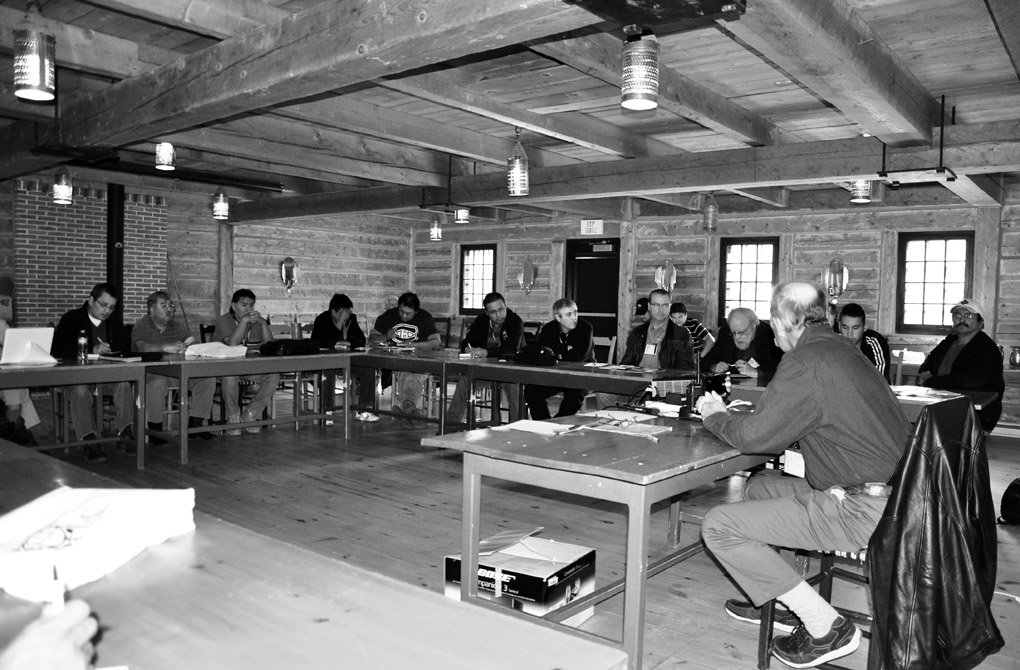
The gardening project was highlighted during the Northern Ontario First Nations Environment Conference, held Oct. 4-7 at the Fort William Historical Park near Thunder Bay.
The conference also included a number of unique workshops, including a field trip to a nearby waste facility lead by True Grit Consulting and a Matawa First Nations workshop on benthic invertebrate collection focusing on bottom feeding insects in nearby streams.
“That was collecting bugs from the bottom of the river and looking at them as indicators of stream health for community-based environmental monitoring,” said Sarah Cockerton, program coordinator for Matawa Four Rivers Environmental Services Group. “Looking at them is an approach we are really excited about at Matawa because we think this is going to be a way the Matawa communities or any communities can really get involved in monitoring.”
Cockerton said another highlight during the conference was a presentation by the Mushkegowuk Environmental Research Centre on First Nation capacity in reviewing and monitoring impacts of mining activities, including the challenges First Nations communities face in the environmental permitting process and community-based monitoring and baseline data collection.
The conference included workshops on fuel spill response and product transfer area design, waste site and hazardous waste management, indoor air quality, joint environmental assessment processes, community based environmental monitoring, the Chiefs of Ontario’s First Nations environmental assessment toolkit, drinking source water protection, traditional ecological knowledge collection, mining capacity building and community protection, community gardens, environmental health, energy conservation and efficiency, renewable energy, recycling programs and making dirty water clean.
“The planning committee really focused on bringing together environmental planners, technologists, researchers, and specialists who can really focus on what is important to First Nation communities today,” said Natalie Popovic, Windigo First Nations Council technical unit representative and conference planning committee member. “Right now, most of this work revolves around protecting and healing our Mother Earth. Environmental damage has a tremendous impact on First Nations people whose lives are traditionally, culturally, spiritually and physically connected to the land.”
A trade show was also held on the third day of the conference.



Forest fires have always been a deep worry for those of us who live in the far north of Ontario. We are surrounded by endless forests and we know full well...
First Nation youth representatives are letting the world know that Indigenous people are ready to stand up and protect the land. Keira Spence, Kohen...