



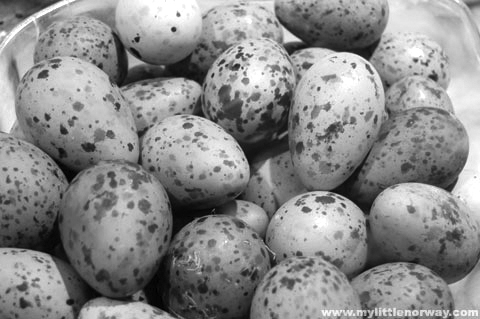
Eggs from fish and seagulls were part of the traditional diet in Pays Plat, a Robinson Superior community located on the shore of Lake Superior.
Along with moose, rabbit and even bear, eating eggs and other traditional foods was not only for survival, but a way for the people of Pays Plat to connect to the land.
“This land is our land,” said Pays Plat Councillor Raymond Goodchild. “It’s not only this little (reserve) here, we’re attached all the way down through our traditional territory.
We’ve got family down in Marathon and Pic River, we’ve got family up in Lake Helen, we’ve even got family up north.”
Goodchild said community members used to travel to wherever food was available before the Pays Plat reserve was established.
“They had to travel with the game,” Goodchild said. “If the ducks are moving, you got to move with the ducks and geese. If you don’t, you will starve.”
Peoples’ travels made having a diverse diet important. Today, many members in Pays Play still eat the foods of their ancestors.
“We boil the fish eggs up,” Goodchild said. “We also eat the heads of certain fish.”
Goodchild said seagull eggs are collected along the shores of Lake Superior.
“Seagull eggs are a lot better than farm eggs,” Goodchild said. “One omelet covers the whole frying pan and it tastes different.”
Goodchild said the newcomers learned to eat seagull eggs after arriving on the shores of Lake Superior.
“They would eat what we have to eat or they would starve,” Goodchild said. “And we even showed them how to eat bear. At one time we used to eat bear, because we had to eat.”
Goodchild said rabbit was also on the community’s traditional diet.
“We believe the rabbit in certain seasons is medicine for us,” Goodchild said. “The rabbits in January eat certain plants that give us healing for our sicknesses. That is what we believe.”
Goodchild said the rabbit “guts” were also fried up in a frying pan with butter in the spring after being cleaned out and washed with salt.
“That is some smell,” Goodchild said. “It was good, though. It turns into some kind of spicy little stuff. It has a tingling taste to it.”
Goodchild said the large intestine of the moose was also a tasty food.
“You smoke it over a fire,” Goodchild said. “They smoked that, then they boiled that. It’s good too, I really like it.”
Pays Plat has been developing a healing plants book with photographs over the past three to four years as a resource for future generations.
“What are the healing plants?” Goodchild said. “We have to talk to the older people to get their permission and location of some of the places where they know where the plants are.”
Goodchild said the book will be an important resource to provide youth with information about how they are attached to the land.
Goodchild is looking for the youth to learn more about their traditions, noting that community members used to have an in-depth knowledge of the land back then.
“If we start learning what the land is, we learn that it is part of us,” Goodchild said. “We are part of the land. We walk on it, we eat on it, we live on it, we sleep on it.
The water and everything in it is part of us.”
Goodchild said the Anishinabe need to get back on the land and own the land.
“We were here and we owned the land,” Goodchild said. “We were born here and we owned it. And the resources are our resources — the berries, the trees, the moose, the fish and even the
rocks.”


First Nation youth representatives are letting the world know that Indigenous people are ready to stand up and protect the land. Keira Spence, Kohen...
My home community of Attawapiskat First Nation is celebrating the annual graduations of students from Kattawapiskak Elementary School and Vezina Secondary...