


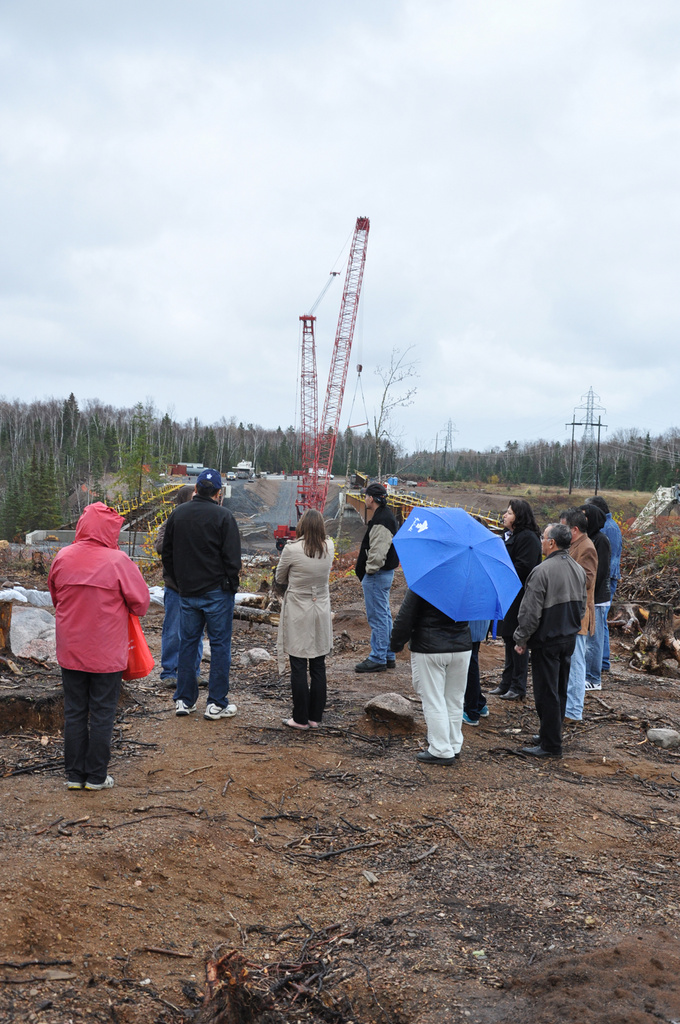
Area First Nation leaders had no idea thousands of ancient artifacts were excavated from the new Highway 11/17 site near the McKenzie Inn outside of Thunder Bay.
The artifacts were shipped to Lakehead University.
To prevent such an incident from happening again, Anishinabek Nation leaders in the Northern Superior Region are developing a consultation and accommodation protocol. Regional chiefs met with David Norris of Saskatchewan-based Western Heritage, the archaeological firm doing the work, Oct. 14.
During the meeting, Norris told the regional chiefs his firm was told consultation had already been performed, adding had it known, it would have done its own consultation with First Nations in the area.
“We are proposing in-depth consultation and accommodation in any future endeavours,” said Regional Grand Chief Peter Collins. “The Northern Superior Chiefs, with support from the Union of Ontario Indians, will create a regionally-based consultation protocol to include all traditional territories. This protocol will be presented to both federal and provincial government offices.”
Consultation must be more than just the delivery of a piece of paper to regional First Nations letting them know what is happening, Collins said.
“That’s disrespectful to our communities,” he said.
A proper protocol would allow proper consultation on the project and involvement with decision-making, planning and involvement with the recovery of artifacts.
None of that happened at the current site, Collins said.
“Any significant archaeological discovery within the traditional territories requires immediate and meaningful consultation by all parties involved,” he said. “While the Northern Superior Chiefs recognize the impact that finds may have on development in the area, it is important to know that the artifacts are tied to our history and people. Government has a responsibility of consultation.”
Collins said it is First Nations history which was unearthed in the past 18 months during the construction.
“We want this history of where our path has been,” Collins said.
Anishinabek Nation Grand Council Chief Patrick Madahbee sat in on the meetings.
“First Nations all over this region shouldn’t have to wait a year and a half to find out (about the discovery),” Madahbee said.
Lakehead University professor Scott Hamilton, an archaeologist who has worked with Kitchenuhmaykoosib, said consultation and accommodation are issues he and his colleagues have struggled with.
“Archaeologists are getting mixed signals (about) what we are supposed to be doing,” Hamilton said in an email, referring to the entire industry and not specifically the McKenzie site. “When does this consultation have to occur: at the very earliest of planning stages for projects that might not go anywhere or at the time when they have been developed sufficiently to actually have some concrete plans to discuss?”
Hamilton said archaeologists all know that “a new way of doing business” is coming. At the present time, there are a lot of questions and few answers.
“But we don’t have a good sense how to proceed as these complex issues are worked out,” he said. “This will be a particularly important issue for people addressing the archaeology, culture and history of northern Ontario where Aboriginal people form the vast majority.”


This past month, I was happy to attend two Pow Wows I hadn't been to in years. I attended the Mattagami First Nation Pow Wow and the Matachewan First Nation...
I was happy to see my home community of Attawapiskat on the James Bay coast announce the opening of the new St Francis Xavier Parish Church on August 25....