



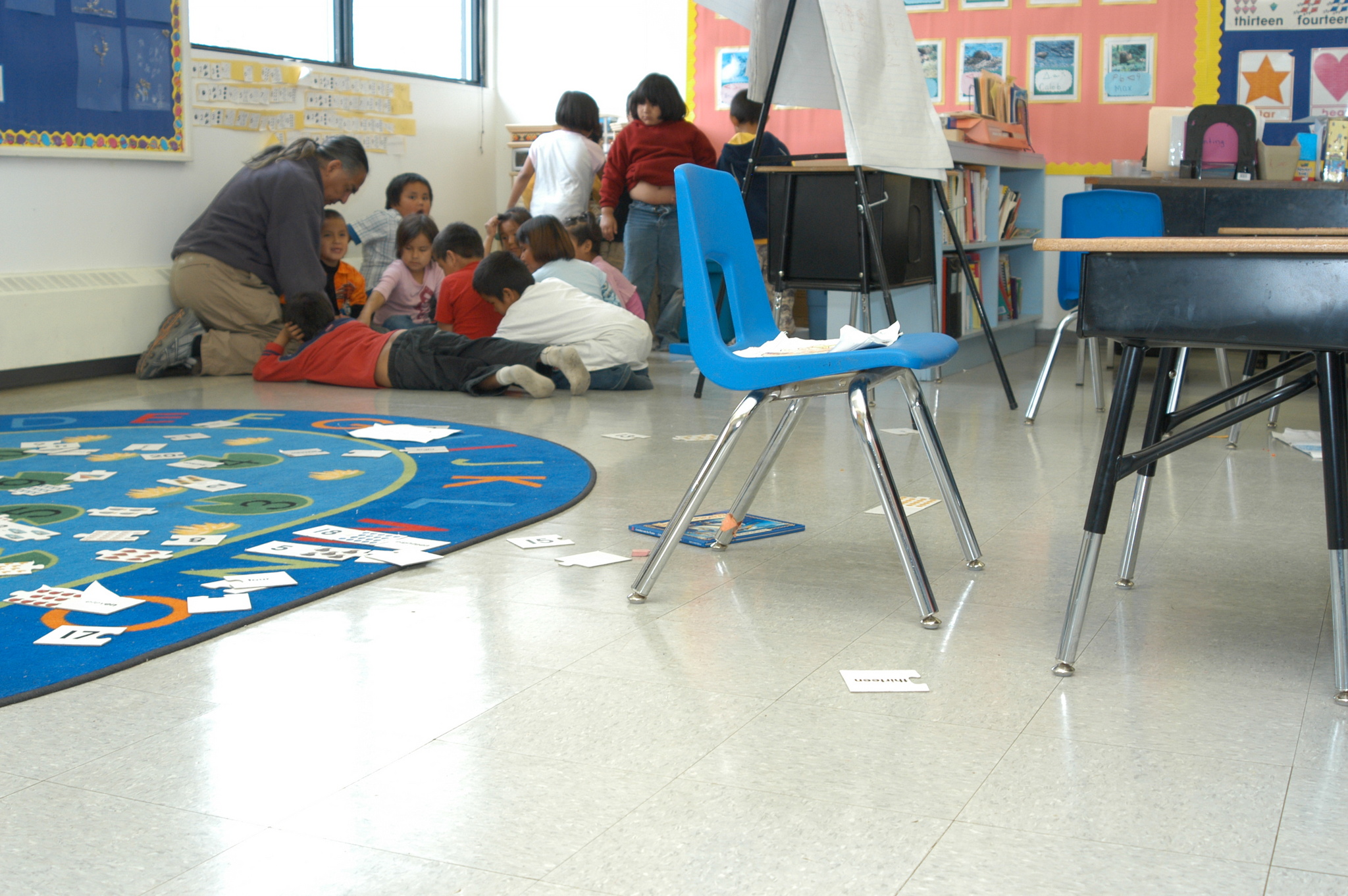
More funding won’t close education gap: INAC
First Nation education funding is like buying a car.
In the same way power windows or a remote car starter makes life easier but will cost more, so do second level education services on- and off-reserve students need to ensure their success says Murray Waboose.
“INAC (Indian and Northern Affairs Canada) funds First Nation education like a base-model of a car,” said Waboose, education manager for Matawa First Nation Management.
He said adding “extras” like speech language pathologists, psychologists and special education services all cost more.
“We don’t get funding for those services,” he said.
However, these are services available under the provincial school board system, explaining the funding gap between First Nation and provincial schools.
Recognized learning disabilities like attention deficit hyperactivity disorder (ADHD) are funded as second-level services in the provincial system. But in the federal system, funding for specialists to work with ADHD students comes from the base funding, Waboose said.
“First Nations or their regional organizations have responsibility for managing and delivering education programs and services in schools on reserve,” said Geneviève Guibert, media relations officer with INAC.
“INAC provides funding to First Nations for the provision of educational services based on a number of elements required to deliver those services rather than on a per capita basis.
“Funding is used for teachers’ salaries, instructional services, and student support services such as transportation, counseling, accommodation and financial assistance.
“Funding is also used for education management, curriculum and language development, teacher recruitment and retention strategies, engagement of parents and the community in education and for technological and other resources and supplies, including computers.”
However, Waboose said access to specialists is limited.
“Speech language pathologists and other specialists, we have very little access to these services as First Nation educators,” he said.
It is not because schools don’t want them, they simply can’t afford such luxuries, he said.
Education funding for First Nations schools is capped at annual increases of two per cent.
Not at a time when these increases don’t keep up with inflation.
Terry Waboose, deputy grand chief of Nishnawbe Aski Nation, said a human rights case could open the door to improved funding levels, but at this time, it’s not being considered.
“Some people have looked at that,” he said. “But we are mostly looking at lobbying.”
Murray Waboose said it costs Matawa’s First Nations an average of about $11,800 to have a student enter the provincial system under tuition agreements with local Thunder Bay high schools. This amount covers only basic tuition services. Any extra services will cost more.
By comparison, Northern Nishnawbe Education Council executive director Jennifer Manitowabi said per pupil funding rates at Dennis Franklin Cromarty High School are $11,474. At Pelican Falls First Nations High School, the rate is $9,403.
On-reserve schools receive about $7,000 per student, said Goyce Kakegamic, Keewaytinook Okimakanak education coordinator.
However, Guibert said in 2009-2010, INAC’s total investments in First Nation elementary and secondary education equated to approximately $11,500 per eligible student.
“INAC invests (about) $1.4 billion annually for elementary and secondary education for about 118,000 First Nation students living on reserve,” Gilbert said. About 60 per cent of on-reserve students attend school in their communities.
Kakegamic said Aboriginal students are being let down by INAC nearly from the moment they walk into their First Nation community schools as five-year-olds.
Citing a 2001 study of Sioux Lookout-area First Nation students by the University of Western Ontario, 88 per cent of youth in Grades 2-8 were at least two grades behind the norm when they were tested.
“That’s shocking,” Kakegamic said.
The same study found 50 per cent of on-reserve students and 10-15 per cent of Aboriginal students in the provincial system met the criteria for special needs.
“We need to evaluate our educational programs,” Kakegamic said.
Students are dropping out because of their lack of success but they are not getting the help they need he said.
“Instead of just passing them on, we need to start looking for answers,” he said.
Manitowabi said her teachers aren’t able to access the same professional development programs as teachers in the provincial school boards.
“It is hard to find supply teachers to cover ... because the rate INAC pays supplies is about half of what the school boards pay,” she said.
When the provincial report cards were changes this summer, NNEC teachers weren’t given professional development to learn about the changes, she said.
“We’re being held accountable to the same documents but we’re not getting professional development for that,” she said. “We had to scramble to find professional development. Often, it is not pre-thought out.
“It does affect the students. It trickles down to them.”
To compare the current federal system to that of the province is unfair, Murray Waboose said.
“It is hard to compete with the system that is very well funded,” he said. “If you want us to compete with the provincial schools for performance and on standardized tests, fund us and we will compete. If you want parallel results, you need parallel resources to be part of that process.”
The problem starts with on-reserve funding levels, Waboose said.
“First Nation schools are given an allocation of band council funding,” Waboose explained. “There is not a distinction between elementary and high school funding levels. It costs a lot more to operate a high school with specialized classes and classrooms.”
Guibert also said comparisons are unfair.
“Making direct comparisons between INAC’s funding and provincial funding is difficult because there are significant variations in per student spending,” she said. “Comparisons need to take into account important differences such as geographic location of the school and its relative size, which are factors that determine how much funding a school receives.
“In addition, each level of government may account for education funding differently. For example, the $1.4 billion for elementary/secondary education does not include what INAC also provides for band employee benefits (such as teachers’ pensions), for local government and administration, or for school construction, maintenance and operations.”
Under the provincial system, about 30 per cent more funds are allocated for high school than elementary school, Kakegamic said.
The types of schools youth attend are also impacted by funding, Terry Waboose said.
He said students need access to gymnasiums and full libraries.
“These can’t be absorbed into the school for more teaching space or cut from plans to save costs in construction,” Terry Waboose said.
Kakegamic said he always encourages students to dream and strive for success.
“The unfortunate reality is for many students, it just remains a dream,” Kakegamic said.
“Each province has a minister of education who has a background in education. INAC just has a minister.
“I don’t think INAC is taking education seriously. INAC is telling our children they are not as important as other children in the provincial school system.”
The funding issues have left First Nation students in a position where Auditor General Sheila Fraser said in 2004 it will take 28 years for First Nation students to catch up to their non-Native counterparts.
That number may have grown even larger since, Kakegamic said.
Kakegamic said it goes beyond simple funding issues, calling it a policy issue that is holding First Nation students back.
“The provincial government sees education as an investment in the youth,” Kakegamic, a former teacher, principal and education director, said. “INAC considers education as a cost.”
He said the gap between Aboriginal and non-Aboriginal students won’t be closed until the discrepancy in funding is addressed.
Terry Waboose agrees.
“In order to close the gap, a major investment will have to be made,” he said. “It can’t just be a financial investment. There has to be growth and jobs and commitments to the future. The youth need to see they can participate in the future.”
Guibert said simply increasing funding for First Nation education without achieving greater comparability between band-operated and provincial school systems will not necessarily lead to comparable outcomes.
“Comparability is about making it possible for students to transition without academic penalty between First Nation and provincial schools,” she said. “It is also about enabling First Nations to deliver a quality education on par with publicly funded schools in the same province.
“The status quo will just grow the divide,” Terry Waboose said.


This past month, I was happy to attend two Pow Wows I hadn't been to in years. I attended the Mattagami First Nation Pow Wow and the Matachewan First Nation...
I was happy to see my home community of Attawapiskat on the James Bay coast announce the opening of the new St Francis Xavier Parish Church on August 25....