



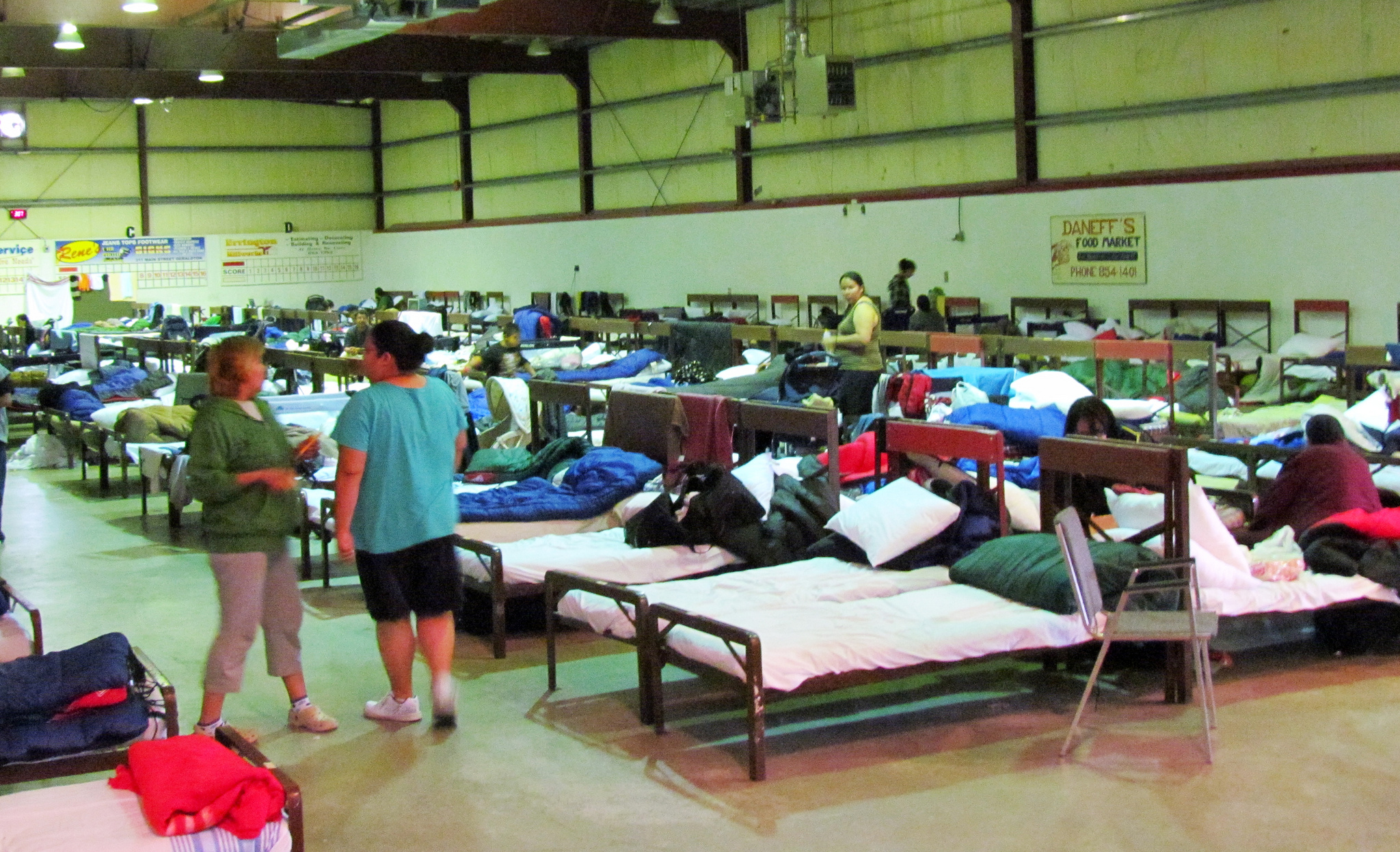
Despite the shock of being forced to suddenly leave their homes because of a forest fire, evacuees from Deer Lake First Nation are grateful for the help they received when they arrived at the evacuation reception centre in Geraldton, Ont.
The evacuees, 546 of the most vulnerable of the residents of Deer Lake, an isolated Ojibway community in northwestern Ontario, left the community on a military C130 Hercules aircraft. A forest fire burns only 3.5 kilometres from the settlement. The evacuees are Deer Lake’s elderly, pregnant women, mothers with children and people with respiratory problems.
Saggius Rae, a Deer Lake elder and retired pastor, said it was shocking for the residents to be suddenly uprooted.
“The change in their environment was so great once they got to the reception centre,” he said. “At Deer Lake the way we live is extremely different. So the reaction was one of shock. At Deer Lake we live in our houses and in our homes. We come here and all these people were forced to live together in one space. There’s lots of people with children and children crying and making constant noise. That’s part of the shock.
“A lot of the parents get frustrated because they have a certain way of doing things with their children at home and now they can’t do that now because there are so many people together, and it’s very difficult to take care of their children the way they want to.”
Children under 16 make up about one third of the evacuees.
For many of the evacuees, Rae said, the shock began with the military flights. The evacuees, used to flying on smaller and more comfortable civilian aircraft, found the experience of flying in the huge and austere interior of noisy military cargo planes unnerving.
“The air force were very courteous and considerate,” he said, “but the interior of a large cargo plane was very strange and frightening for many.”
While life at the personal level has been challenging after a week at the reception centre, he said, the people running it do whatever they can to make life as interesting and pleasant as possible.
“They’ve been good to us and we appreciate it.”
The reception centre, located in the Geraldton Community Arena, can sleep up to 600 people in military cots. When the number of evacuees is larger, additional space is found in other arenas and schools in Geraldton and neighbouring Longlac, Nakina and Beardmore.
Since 1980, Geraldton has received more than 10,000 evacuees from First Nation communities, giving the town and the Regional Municipality of Greenstone a lot of experience in handling them. The Deer Lake evacuation is the 39th since 1980. With one exception, spring flooding on the James Bay coast, all the evacuations have been for forest fires.
“We have a lot of experience now,” said Roy Sinclair, Greenstone’s chief administrative officer. “We usually have a day or two’s notice and we get our team together. “
The team includes cooks, cleaners, drivers, security personnel, administrative and recreational personnel and many others. To keep people occupied, the centre offers trips to beaches for the children and to quiet parks for the elders. Baseball and other games are organized “and we play a lot of bingo here,” Mr. Sinclair said. As many jobs as possible are offered to evacuees, who help with cooking and serving meals and helping to run the various services and programs.
He said the patience of many of the evacuees is impressive and so is their gratitude for what is done for them, even though they want to return homed as soon as possible.
“They don’t demand,” he said. “They invariably ask if something is possible. And if it is they appreciate it. It’s rewarding working with them.”
Sgt. Peter Moon is the public affairs ranger for 3rd Canadian Ranger Patrol Group at Canadian Forces Base Borden. The Canadian Rangers are operating Camp Loon, a training camp for Junior Canadian Rangers, on Springwater Lake, north of Geraldton, from July 12 to 21.



I was happy to see my nieces and nephews in Attawapiskat taking the opportunity to learn about the traditional practice of making Nah-mesh-tek, the Cree...
Maachestan, the Cree word for the annual spring river ice breakup, is happening all along the James Bay coast. This is a very important time of year for...