



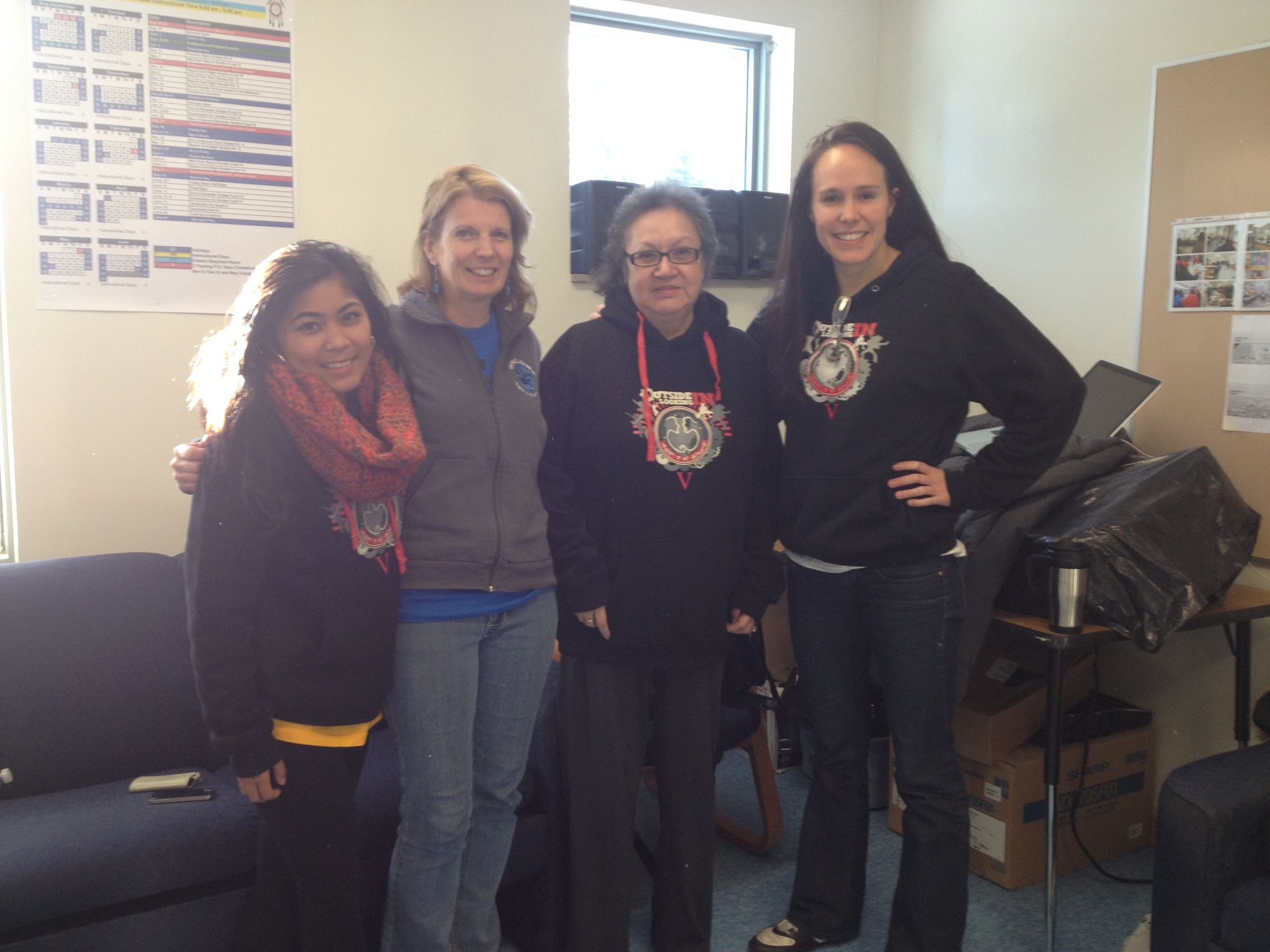
Sandy Lake students discovered the art of dance on Nov. 19-21 and now have the opportunity to bring it the main stage in Toronto next summer.
More than 40 students in Grades 7-10 took part in a three-day dance workshop led by Outside Looking In (OLI), a dance program that operates in First Nations communities across the country.
“Every community is different and the Sandy Lake kids just couldn’t wait and were craving more dance,” said Tracee Smith, founder and artistic director of OLI. “We probably would’ve danced for longer days on end.”
Smith, a Missinabie Cree member, said OLI was approached by Thomas Fiddler Memorial High School principal Sarah Sawanas to run the program in their community.
The program allows students to earn a high school credit and, depending if they meet certain criteria, have the opportunity to be invited to dance at a major showcase in Toronto in June.
Smith said after students approached her to ask how they can be selected, Smith asked them who they think would decide. They said “you do,” pointing to Smith.
“I said no, you do. They choose themselves. We set criteria and we have strict academic standards, and if they’re dedicated and attend rehearsals, we invite them.”
Earlier this year, 14 youth from Lac La Croix took part in the Toronto showcase, including Lance Geyshick.
It was Geyshick’s fourth time taking part. He first joined the showcase in 2008 when he was 12.
“I used to be a really shy kid,” he recalled. “It brought me out of my shell and I don’t think I’d ever do something like this.”
As an alumni of the program, Geyshick joined OLI in going to Sandy Lake to help inspire the youth.
“I told them to just take it all in, enjoy it, don’t be shy,” he said.
Queenie Seguban, a dance choreographer who facilitated the workshops, said she was impressed with the Sandy Lake students.
“It’s amazing to see how self-motivating they are even though not all have danced before,” she said. “And their motivation to learn more and was inspirational to me, even as a professional dancer.”
In addition to Sandy Lake and Lac La Croix, OLI has previously operated in Pikangikum and Onigaming in northern Ontario.
OLI was founded in 2007 by Smith to instill leadership, commitment and dedication in First Nations youth through dance.
“Most importantly, I thought that no matter where kids are located, they should have same opportunities and to experience dance,” she said.



This past month, I was happy to attend two Pow Wows I hadn't been to in years. I attended the Mattagami First Nation Pow Wow and the Matachewan First Nation...
I was happy to see my home community of Attawapiskat on the James Bay coast announce the opening of the new St Francis Xavier Parish Church on August 25....