



Pelican Falls First Nations High School located just outside Sioux Lookout, is unique in the fact that it combines a formal school curriculum with traditional teachings. One of the courses they offer is the traditional harvesting program that consists of components such as trapping, snaring and harvesting of traditional foods and medicines.
The present course, though still in its infancy stage has been running for three years. The idea originated over a lunch between staff members Kaaren Dannenmann, Desta Buswa and Nathan Hunter. Kaaren who is running a course called “Gifts From The Moose” where she brings in various parts of the animal, and explains to students how certain parts, like the hide can be made into useful items.
Out of this meeting the idea was formed to start a traditional harvesting program. Initial approval was sought and granted by the principal Darryl Tinney and finally approval was given by the Ministry of Education for a program consisting of dual credits.
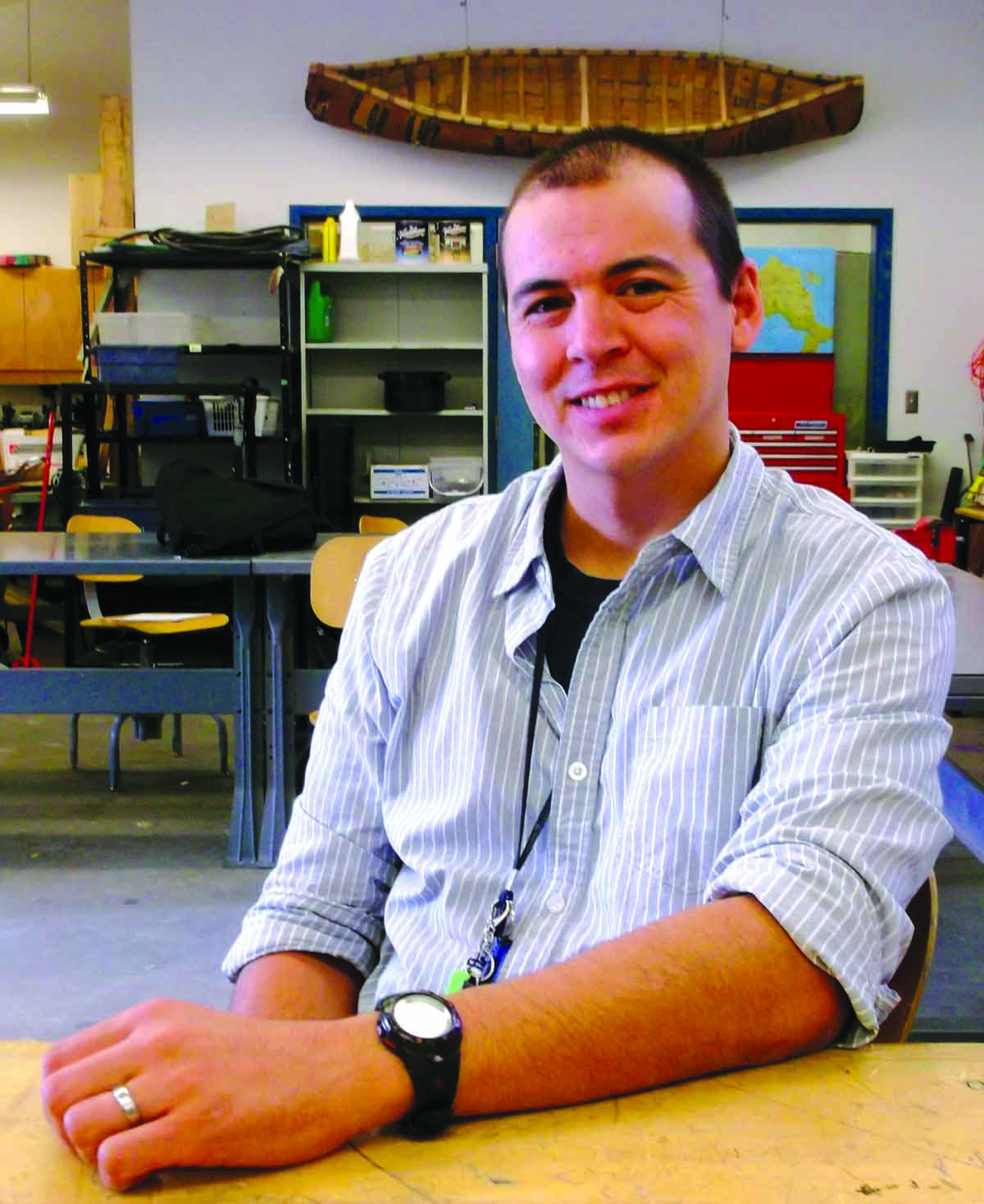
Nathan Hunter, the main teacher involved in the program, explained what the course is about.
“It isn’t exactly a process that focuses on one particular traditional skill be it hunting, trapping or gathering of traditional foods and medicines,” he said. “It can take in a little bit of everything, so the curriculum we use, is an inter-disciplinary studies curriculum, so as far as being legitimized in the Ontario curriculum, that’s the credit we grant.”
The course is designed to give students an understanding of the importance of culture and the importance of place in that culture with a deeper understanding of how First Nations people originally survived off the land by not only just surviving but were able to live healthy, happy lives due to the fact that everything they used in their every day lives came from the land.
“Off course the stuff that we do has to be modernized, we use modern equipment such as boats, guns and modern traps when we are doing our harvesting faculties, but we do examine the importance of the ceremony surrounding those harvesting practices,” Hunter said. “The focus is on collecting food, medicines, useful resources from nature and preparing and preserving them for use, whether that be eating or making crafts or tools. At the beginning of each semester we do plant identification, a little bit of wild medicines, traditionally use full plants and includes useful woods such as black ash and birch bark trees.”
During the program the students are taught how to net fish in a modernized way using a motorboat then are taught how to clean and smoke the fish which are then cooked with portions saved in the freezer for traditional feasts that occur periodically at Pelican Falls.
During the semester the students are taken on a combination duck/moose hunt in Lac Seul traditional territory which lasts for three days. They camp out in Lac Seul and with the able assistance of Elvis Trout and two assistants they are taught the art of trapping, snaring small game partridges, rabbits and hunting moose.
The animals are used in various ways such as a moose that was hunted in the first year whose hide was used to make a large drum skin for one of the schools large pow wow drums. It was also used to make snowshoe laces for the snow shoes they make at the school.
During the first year of the course, the students participated in the trapper's course which was put on by the Treaty #3 Trapping Resource Centre.
A new addition will be crafting and manufacturing where students will learn how to make baskets and tan hides using a couple of beaver pelts that have been saved for the occasion.
The response to the program has been overwhelming with many students wanting to be part of it. Due to the nature of the course they are limited to between 12 to 14 students per semester however as it expands the number of participants will increase.
The course offers young people the opportunity to be part of the land and learn traditional skills that not only bring them closer to their heritage but can assist them in making the transition from youth to adult.
“The greatest pleasure I find is taking a bunch of students out on a moose hunt and to see the joy on their faces when we catch one makes me realize that we are on the right track and that future generations of students will attain the same feelings of fulfillment,” Hunter said.


This past month, I was happy to attend two Pow Wows I hadn't been to in years. I attended the Mattagami First Nation Pow Wow and the Matachewan First Nation...
I was happy to see my home community of Attawapiskat on the James Bay coast announce the opening of the new St Francis Xavier Parish Church on August 25....