


Environmental impacts are causing a loss of identity and contact with the land.
“Our people at one time knew our identity and our ceremonies and our culture,” said Pays Plat Coun. Raymond Goodchild, a participant at the Matawa Environmental Conference for northern Ontario. “When the environment is being affected, our people are losing how we relate to the land. We’ve got to be more assertive in saying our history is tied to the land, our identity is tied to the land.”
Goodchild said the Elders in his Superior Robinson Treaty 1850 community told him they knew the locations on their traditional lands where bears used to hunt for food, but now bears are usually found at the local dump.
“You don’t find him out at the blueberry patch, you don’t find them eating the suckers, that is how climate and society has changed even animals,” Goodchild said at the conference which was held Oct. 26-28 at Fort William Historical Park in Thunder Bay.
“We need to listen to our Elders to share about our knowledge of the land, because if we don’t get that, we will never know how we are connected to the land.”
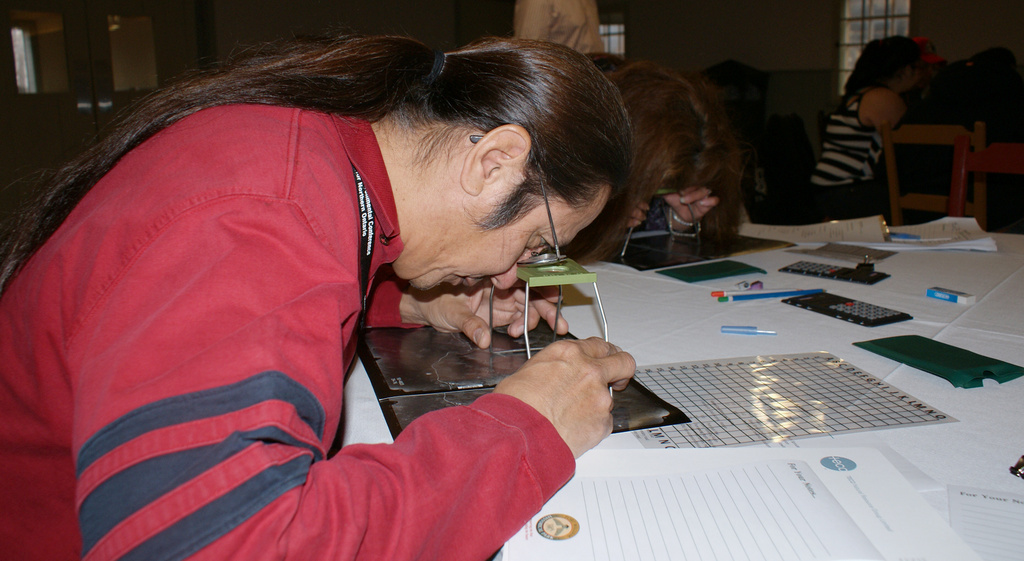
Environmental assessments, land and water management, source water protection, mining and exploration, fuel handling and contaminated sites were the major topics discussed during the three-day conference, which was hosted by Matawa First Nations for a wide range of participants, including representatives from First Nations, environmental consultant companies, mining exploration companies and various levels of government.
Matawa’s Raymond Ferris brought up concerns over past mining practices during the conference.
“Our people in the communities are always concerned about the environment and the practices they have seen in the past,” said Ferris, mining advisor with Matawa First Nations. “They want to change all of that to make it more sustainable and to be more actively involved in any decision making done on their lands and resources.”
Ferris said First Nations want to stop harmful mining practices, such as an estimated 50-year-old stockpile of fuel left behind at an exploration site near Eabametoong.
“That is why the First Nation needs to be involved in putting some kind of environmental monitoring agency (in place) so these kinds of things don’t happen anymore,” Ferris said. “Somebody has to be held accountable.”
Ferris wants environmental concerns to be part of the negotiation process before First Nations give consent to any projects in their territories.
MiningWatch Canada’s Ramsay Hart compared the western concept of sustainability to the traditional concept of stewardship during his Oct. 27 workshop.
“It’s a great opportunity for me and MiningWatch to get some of our ideas and our concerns out there,” Hart said. “My main motivation for coming is to meet people face to face and to see what, if any, role MiningWatch can play.”
Hart said the conference gave him an opportunity to meet people and learn what interests they have and how MiningWatch can help support them.
“This morning we were focusing on mining and how and if mining can contribute to sustainability,” Hart said.
“There were lots of important issues raised about capacity in First Nations: what resources they have and what resources they still need in order to be able to understand and communicate to the communities and be able to evaluate proposals, (and) the importance of compensation from the very beginning stages of the mining sequence.”
A group of 25 Matawa Learning Centre students also attended the conference to check out potential mining careers.
“There’s going to be a big mine going on up north,” said Danielle Yellowhead, a Grade 10-11 student originally from Eabametoong. “There are going to be a lot of opportunities up there for mining jobs.”


This past month, I was happy to attend two Pow Wows I hadn't been to in years. I attended the Mattagami First Nation Pow Wow and the Matachewan First Nation...
I was happy to see my home community of Attawapiskat on the James Bay coast announce the opening of the new St Francis Xavier Parish Church on August 25....