



Reading is an important skill to learn as a child.
But reading novels, magazines and comics should play second fiddle to reading the labels of the food you eat, especially if you suffer from diabetes.
“Label-reading is increasingly important,” explained diabetes dietician clinician Frances Raine, of Diabetes Health Thunder Bay. “When someone has diabetes, you have to have to think about sweet things. Grain, starches, fruit and milk all put sugar in the blood. If you overindulge at once, your sugars will go up.”
For example, a can of juice could put eight or nine teaspoons of sugar into the blood. A can of regular cola could put seven or eight teaspoons of sugar into the blood, Raine said.
For a diabetic, it is a good practice to avoid liquids with the words punch, beverage and drink on the packaging.
“It generally just means sugar,” Raine said.
Instead, people should focus on consuming naturally sweetened beverages and those which contain only fruit and water.
If iced tea, pop or lemonade is more your thing, Raine suggests buying the light or diet varieties of popular mixes.
“It is important to look for alternatives to cut your sugar intake … so it doesn’t spike,” she said.
When it comes to meal planning, diabetics need to focus on their carbs – food that contain sugar to fuel the body.
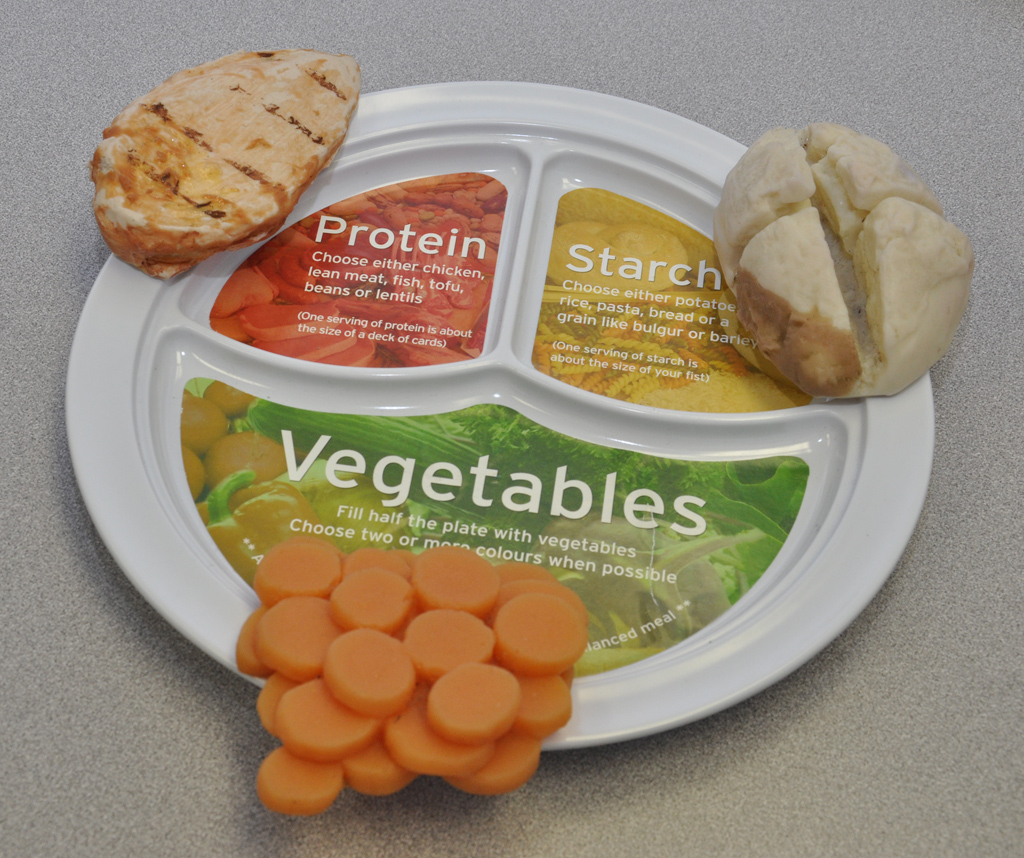
There are six sections in the Diabetes Food Guide – vegetables, grains and starches, fruits, milk and alternatives, meat and alternatives, and fats and oils. The four in the middle are the key, she said.
“Try and eat a variety of foods,” she said. “Try and choose three of the four food groups.”
Example of meals could be toast with peanut butter and fruit or cereal with a banana and milk.
Each contain a balance of healthy foods and carbs.
However, a meal of homemade soup, dumplings and bannock would likely spike the blood sugar if the soup contained potatoes, rice and macaroni while the dumplings are flour-based.
“None of those foods on their own are bad but together as a meal, they are bad,” Raine said.
While vegetables are healthy, most contain little sugar, so there is less emphasis on them when sugar consumption is the main focus.
“You’d have to eat 7.5 servings of some vegetables to get the same amount of sugar as a small piece of fruit,” Raine said.
People also need to consider the way the foods are prepared.
Deep-fried fries are less healthy than a baked potato or mashed potatoes, depending on how the latter are served.
As well, fruit served in syrup is not as healthy as fresh or flash frozen varieties.
“Your best choice is fruit in a water pack or in pear juice which is much healthier than syrup,” she said. “You can still eat a syrup fruit cup but it would have to be more of a dessert.”
When it comes to desserts, Raine said the label reading – looking at the ingredients and carbs and starch levels – becomes ever important.
“People get excited when they see no-sugar-added cookies or pies,” Raine said.
“They think they can eat whatever they want. You can’t have as much as you want. Cookies are still made of flour. They still add sugar into your bloodstream.”


This past month, I was happy to attend two Pow Wows I hadn't been to in years. I attended the Mattagami First Nation Pow Wow and the Matachewan First Nation...
I was happy to see my home community of Attawapiskat on the James Bay coast announce the opening of the new St Francis Xavier Parish Church on August 25....