



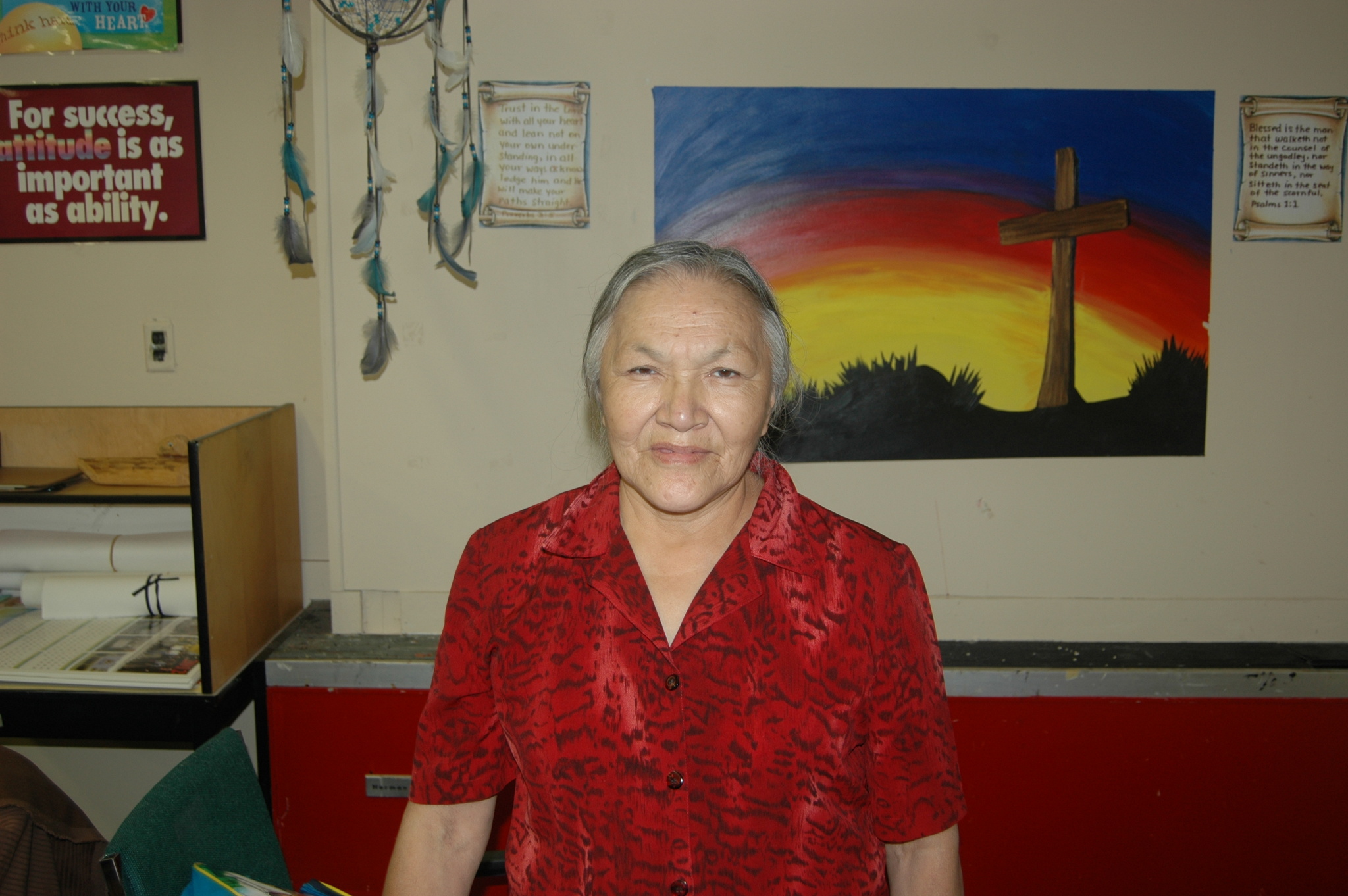
School is about to start up again for many Ontario schools, including Dennis Franklin Cromarty High School (DFC).
But unlike most schools in the province, DFC is preparing to welcome Elders as well as students into the new school year.
“There have always been Elders at the school from the start,” Jonathan Kakegamic, principal of DFC, said. “The past two to three years, we have increased our Elders. We have seven Elders at the school now.”
Kakegamic said that having an Elder present in the school gives the students a sense of security and a sense of community.
“There’s always someone there to go to when you want to talk,” Kakegamic said of the Elders at DFC. “In our culture, the Elders play a big role in the communities and family.”
Bella Patayash of Kitchenuhmaykoosib Inninwug First Nation can be found in the Elders room at DFC on any day of the school week, and occasionally after hours once the final bell has rung.
“I try to stay in the evenings, too,” Patayash said. “It’s the only time they (the students) can communicate with their family back home on the phones and computers.”
Patayash looks forward to doing the same culturally centered activities she has been doing with the students since she first started working as a DFC Elder. She and the other Elders do arts and crafts such as beadwork and sewing with the students.
“I teach arts and crafts because I know a lot of the times when people are done school, they can’t get a job right away. But if you have that (arts and crafts) to fall back on, you can earn your own money. I learned that from experience,” Patayash explained.
The Elders also teach the students how to prepare wild food.
“They like eating wild food, it’s part of their life,” Patayash said. “We teach them how to cut up meat, like how to prepare moose. They also like to make bannock.”
Patayash learned everything she knows from her adoptive mother, whom she said was a hard worker.
“My own mom died when I was young,” Patayash explained. “My mom asked her, my adoptive mother, to raise me to be her daughter. That’s how it is traditionally, a mother would tell a person to take care of their children if they knew they would be gone soon. “
“She did all these things, like preparing food in different ways - also tanning hides and doing beadwork. I was beside her all the time,” Patayash said. “For some reason, I just wanted to be beside her.”
The Elders at DFC often teach by showing.
“They learn a lot just by watching,” Patayash said. “If we have to prepare fish, like cleaning and cutting it up, they will watch. Some want to try it, too.”
The student’s skill level in the various activities improves each year, she said.
“The first year, most are starting from scratch. The second year, they will know more. Some are really fast,” Patayash said of the students. “They catch on right away with sewing.”
Patayash said that the arts and crafts are not just about sewing, and it is often the talking that brings the Elders and the students together.
“You sit with someone while you sew and you get to know them, they talk to you more about things,” Patayash said. “They open up a bit more, like at home. It helps them talk about their feelings and what they’re going through.”
Kakegamic has seen the difference in students who participate in DFC’s Elders program.
“The kids who take advantage of the program, they have improved,” Kakegamic said. “Their marks have improved.”
“We did a youth forum, and the Elders was something that came out regularly,” he explained. “They like it. They like to see that there are different Elders, too.”
The Elders program will be more involved this year with the school’s activities. Visits by Elders to every classroom will take place.
“They talk about life experience – they encourage the kids,” Kakegamic said of the classroom visits.
“I was here in 2004 as a teacher,” Kakegamic said. “I saw what the school could be.”
Kakegamic wanted to incorporate the Elders presence into the school more. He sees now that the program has built a real sense of community in the school. “The Elders have so much knowledge that they can pass on to us. It’s important.”
“It’s mainly because of our culture and our identity,” Patayash said of why she continues to be a part of DFC as an Elder.
She said the first thing she does when she meets a student is speak to them in the language to see if they can understand. If they don’t understand, she does her best to teach them.
“I think it’s important to be able to speak the language and keep the culture,” Patayash said. “That’s the main reason I want to be here.”


This past month, I was happy to attend two Pow Wows I hadn't been to in years. I attended the Mattagami First Nation Pow Wow and the Matachewan First Nation...
I was happy to see my home community of Attawapiskat on the James Bay coast announce the opening of the new St Francis Xavier Parish Church on August 25....