



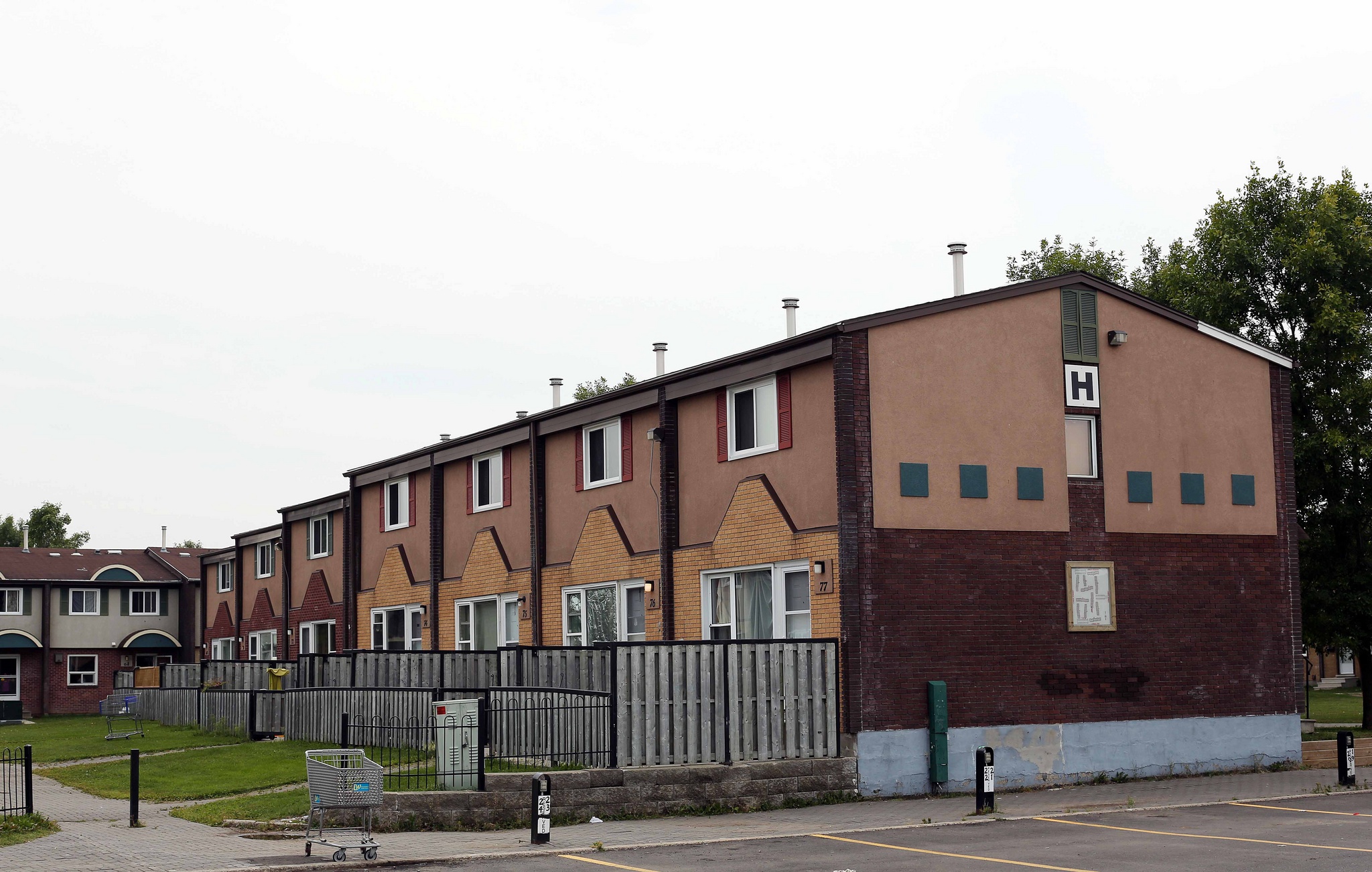
Finding an affordable and safe place to live in Thunder Bay has never been easy for a lot of First Nations individuals who have to move to, or reside in, Thunder Bay.
Low-income housing organizations in the city have waiting lists that are months, often years long.
“I applied for Native Housing once a few years ago but they never got back to me, I always had to call them,” said a client of low-income housing, who asked to remain anonymous. “They told me to keep calling every month to keep my file active. I missed calling them one time, and when I called back the next month to check in, they told me that they had lost my file and I had to re-apply. I didn’t bother.”
The client has been living in a Thunder Bay District Housing unit with her daughter and her grandchildren for the last several years.
“I applied for Thunder Bay housing and it didn’t take long for them to place me,” she said, adding that she was a single mother of two at the time. “I moved in about two weeks after I applied.”
In Canada Mortgage and Housing Corporation (CMHC)’s spring 2012 Rental Market Survey, Thunder Bay had one of the lowest rental apartment availability rates at 3.1 per cent. A rental unit is referred to as available if the unit is unoccupied or if the existing tenant has given or received notice to move and a new tenant has not signed a lease.
With such a small pool to wade through when it comes to finding an affordable and suitable place to live, it is hard to acquire one of the low-income or rent-geared-to-income homes that many First Nation members on fixed-incomes need. Those who are already in Native or Thunder Bay housing tend to stay put.
Ramona Netemegeesic has been a long-term client of Native Housing – she is in her third unit.
Before she was in Native Housing, Netemegeesic described her prior search for an apartment as very hard. She said she had a lot of hassles being a single, young First Nations mother.
“I was living in a basement apartment and it flooded. I was looking around for a new apartment. Everything was unavailable. (The landlords) would say that they don’t accept young mothers, they would tell me no,” Netemegeesic said.
“The landlords kept asking me how I was going to pay the rent since I didn’t work,” she said.
Netemegeesic was told by a relative to apply to Native Housing. It only took a couple of months before she was placed in a unit with her family.
“People keep asking me, how did you do it?” Netemegeesic said about when others ask her how she managed to get into Native Housing. “I have a friend who has been on the waiting list at Native Housing for six months now. She is pregnant and has two kids already, and she is having trouble getting an apartment.”
The need for affordable housing in the city for First Nations people who are on fixed-incomes like disability, old-age pension or social-assistance is a pressing matter. Many times, Elders from northern communities have to move to the city for medical needs that cannot be met in their home communities.
Martin White, who runs the Kizhaay Anishinaabe Niin program at the Thunder Bay Indian Friendship Center, feels that finding a place to live in the city is “almost impossible.”
Martin helps out with the Lifelong Care program at the Friendship Center, which is centred around assisting Aboriginal Elders.
“I know that those affordable housing places do not put Elders in need first. If an Elder ever brought a family down with them, maybe they would,” White said. “If she had all of her grandchildren then maybe they would be put in a high needs category.”
White worries about the Elders who have to live in bad neighborhoods because it is all they can afford on their fixed-income.
“Right now, some of our Elders are living near undesirables,” White said. “I hear stories of individuals who are just terrified, they are living in the ghetto in the middle of town. They are afraid to open the door because of what is going on in the other side.”
The client from Thunder Bay District Housing often deals with hearing rowdy people at night who walk around the rental properties.
“The neighborhood is a little bad, it is noisy at night especially on weekends,” she said. “There are people partying, they walk by our apartment and you can hear them. I just try to mind my own business in this area.”
Being a single mother does not always guarantee you a place to live with places like Native Housing and Thunder Bay District Housing.
The client explained that her daughter has been on the waiting list for affordable housing for almost eight months now. “She is being told to keep calling to find out where she is.”
“It’s tough,” said White. “There was a young man who came to town with his two kids in May.
He went to try to get help at social services. The workers asked him, why aren’t your kids in school? And he told them they needed a place to stay. He needed help; they said they were going to call Dilico on him because his kids weren’t in school. So he didn’t want to go back there.”
White said that the young man’s chief and council put him up in a motel for three months before Native Housing found his family a home.
“There’s something missing,” White said.
Candace Davies, Nihdawin Family Support Worker with Ontario Native Women’s Association (ONWA), said that there is a profound lack of non-profit housing options in Thunder Bay.
Nihdawin is a program that aids in placing children and their families into affordable homes to gain stability. Davies said that stability is the key for working on existing familial problems and avoiding children being removed by child-welfare groups.
It is still hard to find affordable homes in Thunder Bay even for a program like Nihdawin who uses Native Housing and Thunder Bay housing, Davies explained.
“I think it’s due to the economy, the rent is high. It’s putting poverty on the people who can’t afford to pay the rent,” Davies said.
Davies said, for example, a bachelor apartment in Thunder Bay is now going for over $500. She then went on to say that a single person on social-assistance gets a maximum of $372 for shelter costs, and that the rent will have to come out of the basic needs portion of their assistance.
“This leaves them with about $50 for a whole month,” Davies lamented.
“There are high-waiting lists for low-income housing,” she explained. “Right now, Ontario Works is suggesting people go into the mainstream (for-profit housing lists) to look for places to rent.”
Davis said that ONWA’s Nihdawin program does see a lot of First Nations clients who are migrating to the city from up north and are often left on waiting lists for affordable housing for months at a time.
“Ontario Works is going to discontinue the community start-up benefit, which will put a lot of restraints on people moving to the city,” Davies said. Community start-up was around $750 and could help a person cover their first and last month’s rent, she said.
“How can they afford to pay first and last rent without that benefit?” Davies questioned. “Thunder Bay needs more non-profit and low-income houses.”
“A home increases a family’s self-esteem,” Davies said. “It keeps families together.”



This past month, I was happy to attend two Pow Wows I hadn't been to in years. I attended the Mattagami First Nation Pow Wow and the Matachewan First Nation...
I was happy to see my home community of Attawapiskat on the James Bay coast announce the opening of the new St Francis Xavier Parish Church on August 25....