


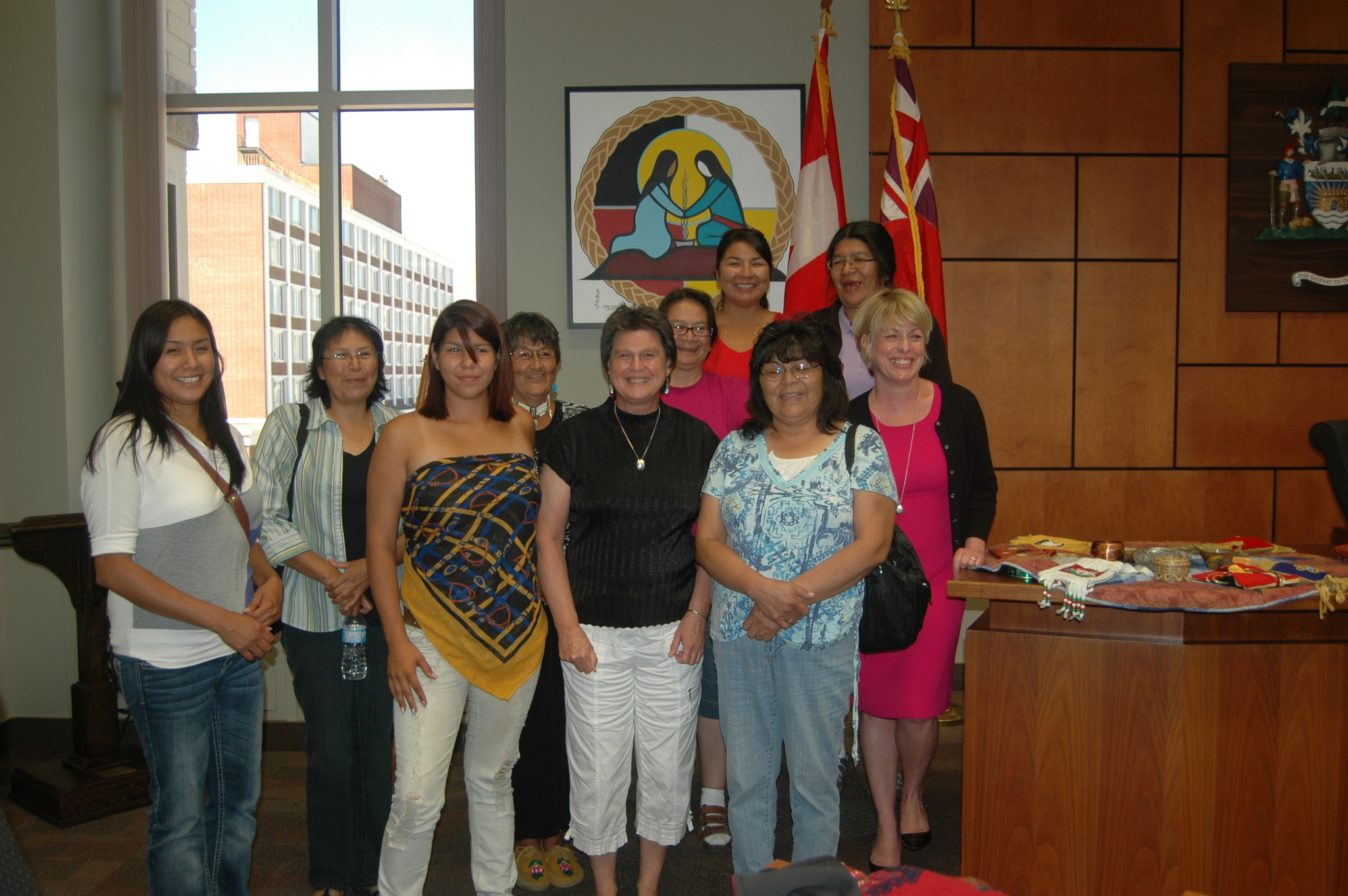
Efforts geared at increasing Aboriginal voter participation took place in Thunder Bay on July 27.
The program brought Aboriginal education students to Thunder Bay’s city hall for a day of learning about civic literacy.
Joan Esquega, a fourth-year bachelor of education student at Lakehead University, felt it was very important to partake in the engagement session at City Hall.
“We, as Aboriginal teachers, need to realize that it’s important for us to bring this knowledge into our classrooms, to teach our children the importance of voting,” Esquega said.
“I think if we can teach them (the children) when they’re younger, they’ll do it as adults.”
Judi Nelson Childs of the Ontario Native Women’s Association (ONWA) spearheaded the session that revolved around encouraging Aboriginal voter-participation in Ontario.
“It started with a report that I did, I work for ONWA and I partnered with four people from the Leadership Thunder Bay group and we did a community action project,” explained Childs.
“The genesis of that report was that we knew Canadians don’t vote – there’s about a 50 per cent rate of voter participation across the country, for Aboriginal people it is even less.”
Childs wanted to take a look at why the rate of Aboriginal voters was low. She explained that the group participated in “an extensive study that turned into a roundtable event” at Lakehead University to try to come up with ways on how to increase voter turnout. It was at Lakehead University where Childs was able to meet up with Dr. Laura Buker, a teacher in the Aboriginal Education Program, to discuss the issue.
Childs expressed how important the participation of Aboriginal voters is, not only in municipal elections but also in Canada as a country.
“In Ontario, there are at least six or seven ridings where the Aboriginal population would be the swing vote. In Canada federally there are 60 ridings where Aboriginal votes would probably make the difference (in results),” Childs said.
Childs felt it was important to focus on Aboriginal voters, more so after the Assembly of First Nations (AFN) elections.
“The fact that there were five women leaders who stepped forward to be a part of that was very monumental,” Childs said.
Childs feels that “change is upon us.”
“It’s a good change because we are asking questions, wanting to be engaged,” Childs said. “Our younger Aboriginal people, they’re the ones that are wanting to lift things forward so it’s very important that we find places in our education curriculum for this.”
Buker credits Leo Baskatawang and his March 4 Justice endeavors for reminding everyone how important it is to stay informed.
“Educate yourself about everything from that Indian act, and why we want it repealed, or at least dialogued about, or changed in many ways,” Buker said.
Buker explained that there is going to be a committee with the city of Thunder Bay that will be working with the city clerk’s office to study the issue of civic literacy, not just for Aboriginal citizens but also amongst all the citizens of the city.
“There’s also going to be work within the Aboriginal community to take a look at the recommendations and have the Aboriginal organizations see where they can help out and help to provide the ‘why should people vote’ part that is missing,” Buker said.
Buker said that Elections Canada and Elections Ontario provide information on how to vote, but feels people also need to know why they should vote.



This past month, I was happy to attend two Pow Wows I hadn't been to in years. I attended the Mattagami First Nation Pow Wow and the Matachewan First Nation...
I was happy to see my home community of Attawapiskat on the James Bay coast announce the opening of the new St Francis Xavier Parish Church on August 25....