


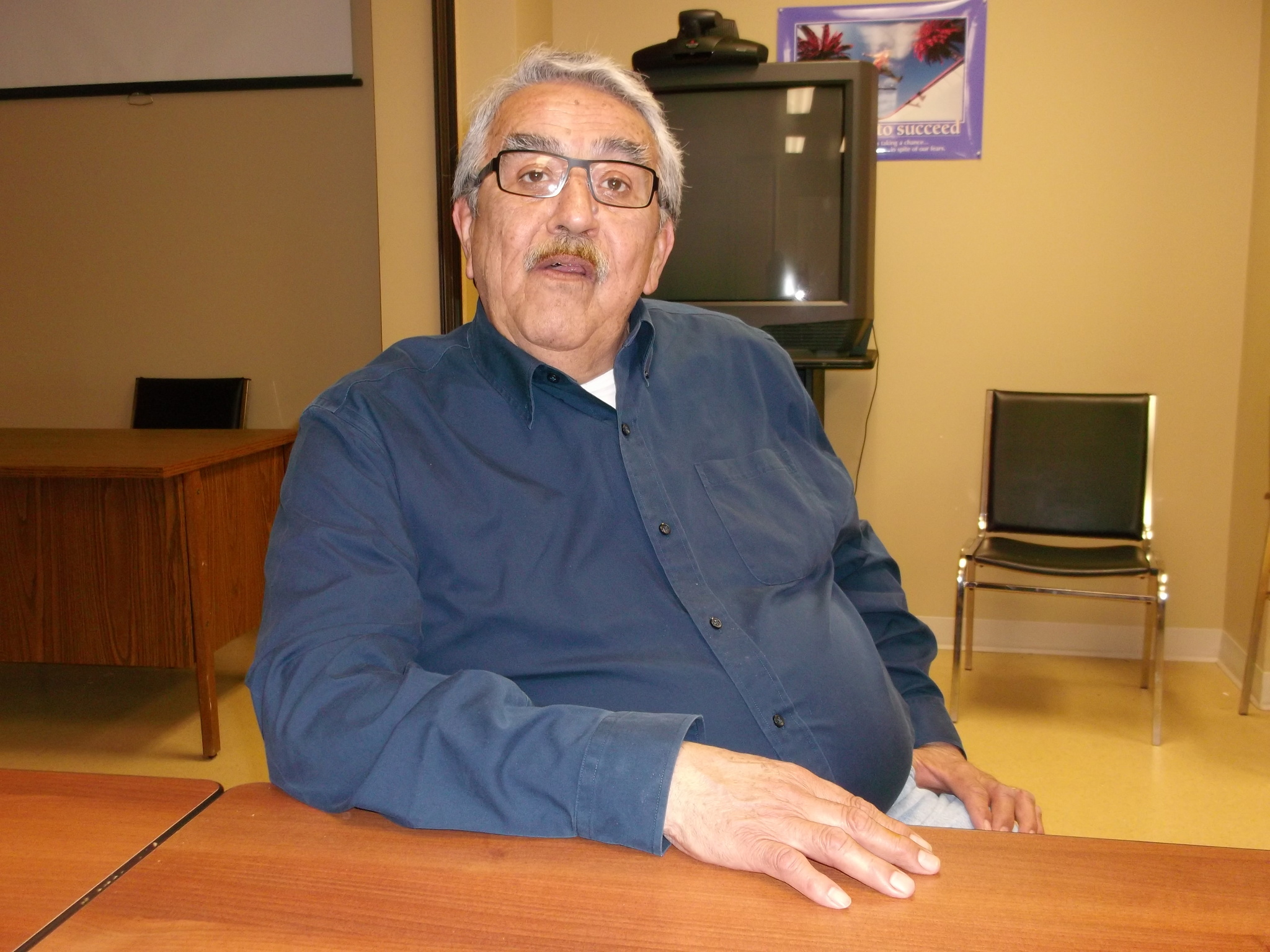
In November 1991, the Sioux Lookout Area Aboriginal Management Board (SLAAMB) was formed to improve the chances of First Nations people living in and around Sioux Lookout and the Northern communities to gain employment and training. The idea was formed and initiated by Bob Bruyere, who had previously been employed as the native employment counsellor for Canada Employment Immigration Commission.
From 1991 to 2013, Bob was the executive coordinator of SLAAMB. On March 29, 2013 he announced his retirement. Geoff Shields spoke with Bob about how SLAAMB originated and what it meant to him.
Wawatay (WWT): What motivated you to initiate the formation of SLAAMB?
Bob Bruyere (BB): Back in 91, the federal government did a Pathways to Success and I was a federal government employee at that time, so I worked with Sioux Lookout Area Chiefs to setup SLAAMB which was a requirement of the federal government. And after months of negotiations and debating, we got an agreement to go with SLAAMB. When the first interim board was set up, a couple of chiefs called them and asked them to contact me and offer me the position as executive coordinator. I reluctantly took the job with a five-year agreement then after that, it was history.
WWT: When it was first formed were there any obstacles you encountered that might have impeded its formation and if so, how did you overcome them?
BB: I guess the biggest obstacle we had at the beginning was to get an agreement amongst all of the parties, five tribal councils, get the chiefs to trust that what we wanted to do was for their benefit, where they would get control of the programs and the funding. So there was a lack of trust between the chiefs and the federal government.
Also at the beginning the Independent First Nations Alliance would not join SLAAMB, for political reasons. We continued to negotiate an agreement with the rest of the tribal councils. That obstacle we ran into is the whole thing of the Interim Board and learning how to act as a Board, and make decisions for the benefit of all of the First Nations communities. That was the main obstacles.
WWT: In all your years as executive coordinator, what would you consider to be your greatest achievement?
BB: Probably the greatest achievement for myself was to get 25 chiefs to agree to work together and to start holding each other accountable which probably took us two to three years to get to that point.
Another one was negotiating with the federal government to provide the full range of services that Service Canada offers, to the remote communities. We have a worker up in Big Trout Lake, one in Sandy Lake and one here in the SLAAMB office. They visit all of the 27 communities to provide a full range of services such as employment insurance, Social Insurance Numbers, passports, help with some immigration issues or direct people to the right department.
The other one was the trades project, it was a three-year project in preparation for construction of the new hospital and new hostel (in Sioux Lookout). We tried to get people certified as journeyman carpenters, electricians and plumbers.
WWT: Do you see a greater acceptance now of employers willing to hire First Nations workers as opposed to earlier days?
BB: I think what helped with that one was, before the hospital was constructed, we met with 15 trade unions and a couple of major contractors, and built a relationship with them to hire First Nations people. The unions did not have a good experience before but when we worked with them we had 280 people looking for work, who wanted to work during the construction of the hospital and hostel. That was the beginning, employers saw that the Aboriginal people wanted work and were quite capable working alongside anybody and so we were slowly being accepted by the employers. The unions continued to want to work with us. And I hope the new coordinator will continue to foster working relationship with the unions and with employers.
WWT: You were recently awarded the Queen Elizabeth Diamond Jubilee medal, what are your thoughts on this.
BB: That came as a surprise because I never suspected anything until two weeks before I was awarded the medal; MP Greg Rickford’s office contacted me and wanted more personal information and that’s when I found out I was being presented a medal. It was truly an honour to receive it but I felt like I didn’t deserve it because I’m not one for wanting recognition for the work I do because I have such a passion for promoting Aboriginal people.
WWT: It took a lot of time and work to get SLAAMB to be the efficient organization it is today - what improvements if any would you like to see happening in the future.
BB: What I would like to see happen is for the chiefs to continue to support and trust SLAAMB and the new coordinator. I would like to see more employers start to treat Aboriginal people as equals and begin to give us a chance to prove ourselves for various jobs.
WWT: At the moment SLAAMB geographical catchments area covers 25 First Nation communities taking in the Northern communities, can you foresee any further geographical expansion?
BB: No, we were approached a number of years back to expand and I discussed with the chiefs and the chiefs said “no, we don’t want to expand, that we are okay with what we are doing, let’s improve the lives for the people in remote communities and not consider expanding.”
WWT: How are you enjoying your retirement and do you have any further plans for the future?
BB: So far I’m enjoying retirement, it’s nice to not to have to get up and head for the job but I’m having difficulty adjusting to the new way of life but will overcome in time. So I am enjoying retirement so far. I’ve been asked to do some work but I said I’m giving myself the month of April to learn to be retired before I do any consulting work.




This past month, I was happy to attend two Pow Wows I hadn't been to in years. I attended the Mattagami First Nation Pow Wow and the Matachewan First Nation...
I was happy to see my home community of Attawapiskat on the James Bay coast announce the opening of the new St Francis Xavier Parish Church on August 25....